
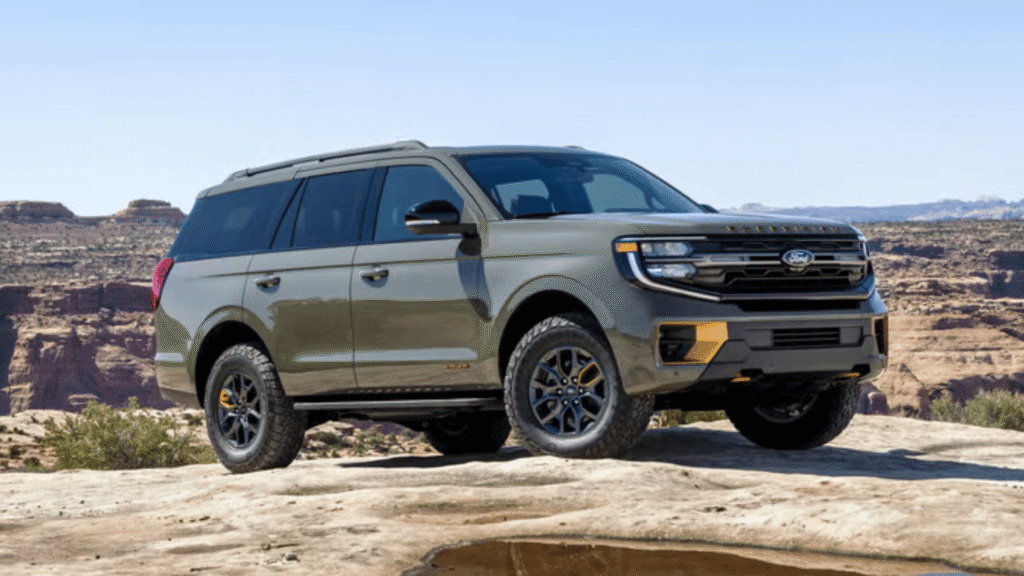
9 Most Reliable SUVs 2026: Consumer Reports Rankings with Honest Reviews & Buying Guide
Introduction: Why SUV Reliability Matters
Choosing an SUV is one of the biggest investments you’ll make. If you’re searching for the 9 Most Reliable SUVs 2026, you want something that won’t leave you stranded, won’t drain your savings in repair bills, and will actually deliver on its promises. That’s where reliability becomes non-negotiable.
Consumer Reports just released their 2026 reliability data, and the results are eye-opening. They tested thousands of owner-reported issues across multiple vehicle categories, and nine SUVs stood out—not because of marketing hype or brand loyalty, but because real owners reported fewer problems and longer-term durability.
This isn’t about paid sponsorships or brand partnerships. This is raw data on most reliable SUVs that actually hold up under real-world conditions. Today, we’re breaking down all nine, from rank 9 to the absolute champion that scored an exceptional 97/100.
Whether you’re a practical buyer looking for dependable transportation, a luxury seeker who wants refinement without constant repairs, or someone planning long-term ownership, understanding these rankings will help you make an informed decision.
What Makes an SUV Reliable? (Understanding Consumer Reports Criteria)
Before we dive into the rankings, let’s understand what “reliable” actually means in Consumer Reports’ methodology. They don’t just guess—they analyze real data from thousands of vehicle owners.
The Reliability Measurement System:
Consumer Reports surveys owners about specific problem areas: engine, transmission, drivetrain, electrical systems, climate control, suspension, and interior components. They track which systems fail most often and at what mileage intervals.
A score of 77/100 means the vehicle experiences fewer issues than average. An 84/100 indicates significantly better-than-average reliability. Anything above 90/100 is exceptionally rare and represents near-perfect execution.
Key factors that separate truly reliable SUVs from mediocre ones include:
- Engine design simplicity — naturally-aspirated engines tend to be more reliable than turbocharged variants
- Transmission type — traditional automatics often outperform continuously variable transmissions (CVTs)
- Manufacturing consistency — facilities with proven track records produce fewer defects
- Parts commonality — vehicles using proven components have fewer surprises
- Owner maintenance culture — some vehicles reward disciplined maintenance; others punish neglect
The vehicles in this ranking excel in most or all of these categories, which is why they stand out.
9 Most Reliable SUVs 2026 – Complete Rankings
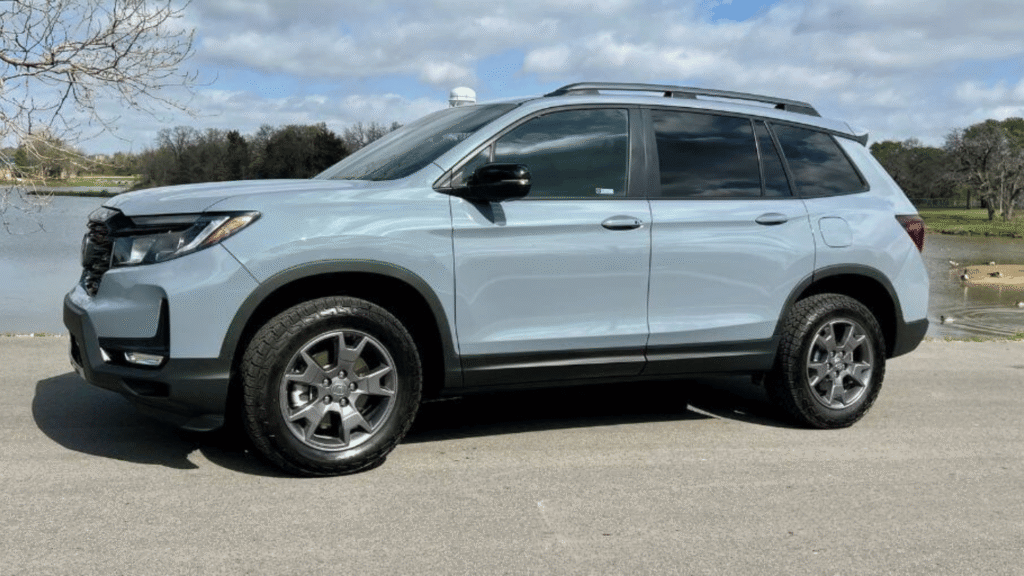
Rank 9: Toyota Crown Signia (77/100) — The Quiet Luxury Bet
The Toyota Crown Signia enters the conversation as the ninth-most reliable SUV, and it deserves attention. This is Toyota’s sophisticated answer to the luxury crossover segment—think of it as the Venza’s refined older sibling.
Built entirely in Japan on Toyota’s legendary production lines, the Crown Signia runs Toyota’s fifth-generation hybrid system. This isn’t experimental technology; it’s a bulletproof setup that’s been logging millions of reliable miles for nearly two decades. Real owners report zero rattles, zero panel gaps, and build quality that feels intentional from day one.
The driving experience is remarkably serene. The ride is smooth, the cabin is quiet, and the overall experience feels almost EV-like around town. For buyers prioritizing best reliable SUVs with luxury positioning, this delivers exactly what’s promised.
However, Toyota made some baffling design choices here. There’s no spare tire—just a patch kit. Console storage is criminally limited. And if you’re over 6’2″, the low roof line creates genuine headroom issues.
Verdict: Perfect for serene, faultlessly-built luxury commuters who don’t need maximum practicality.
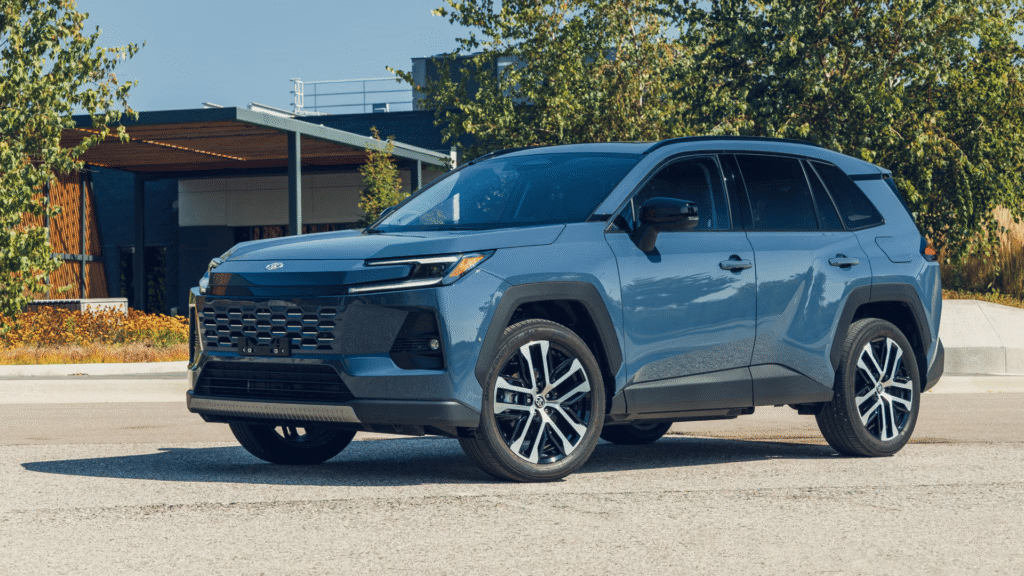
Rank 8: Toyota RAV4 (77/100) — The Reliable Elder Statesman
The RAV4 is in its elder statesman phase. Same generation for years now. But here’s the reality: it absolutely delivers on two foundational pillars—reliability and fuel economy.
Outside of those two strengths, the cabin tech and refinement are starting to feel dated compared to newer platforms. However, what matters here is that the RAV4 is genuinely one of the most dependable crossovers on the market.
There’s genuine discussion in the RAV4 community right now: should you buy the gas or hybrid version?
Old-school thinking suggests gas is simpler and easier to maintain long-term. But the hybrid’s ECVT transmission has no belts or clutches to wear out—which completely changes that argument. The main known issue on hybrid models used to be “cablegate”—corrosion on high-voltage cables. Toyota addressed this in newer builds with redesigned cable covers, so it’s far less common now.
Consumer Reports’ owner feedback shows RAV4 drivers report extraordinary longevity past 150,000 miles when maintained properly. Real owners describe the RAV4 as a vehicle that simply refuses to break.
Verdict: Perfect for practical buyers who value consistency and proven reliability over cutting-edge cabin features.
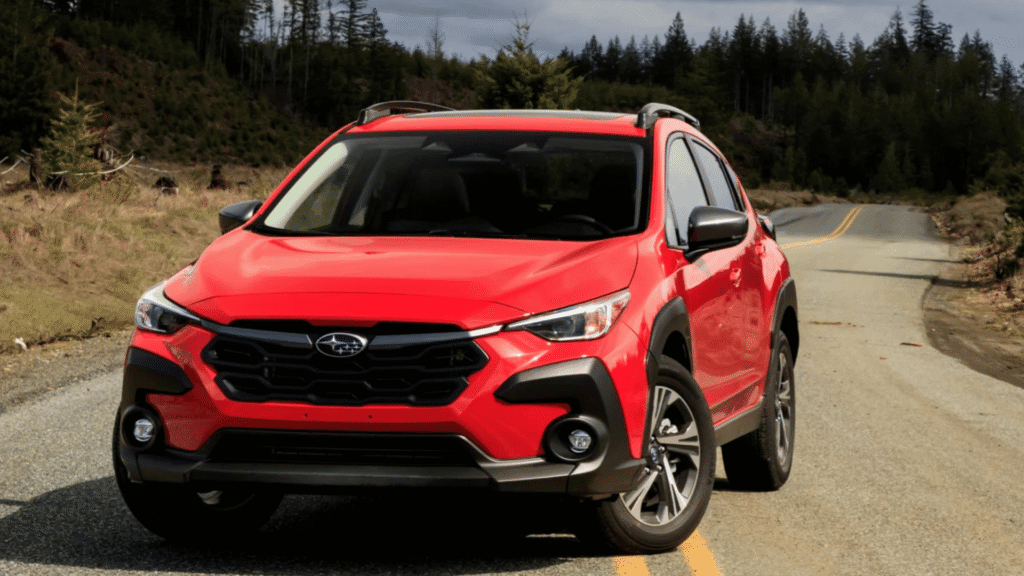
Rank 7: Subaru Crosstrek (78/100) — The Maintenance-Dependent Overachiever
The Crosstrek earns every point of that 78/100 score, but it comes with a critical condition: take care of it religiously, and it will reward you exponentially. Skip maintenance, and it will punish you hard.
Subaru officially calls the CVT fluid “lifetime fluid.” The Subaru community and independent mechanics? They say change it every 30,000 to 36,000 miles. Owners who follow that maintenance schedule report smooth operation past 150,000 miles. Those who don’t? Costly transmission rebuilds that can reach $3,000-$5,000.
The 2026 Wilderness trim specifically adds a built-in CVT fluid cooler—a genuine engineering improvement that prevents overheating and extends fluid lifespan. It’s Subaru listening to owner feedback.
One frustration: the infotainment system. An 11.6-inch tablet that’s laggy, janky, and requires multiple screen presses just to adjust temperature while driving. It’s not catastrophic, but it’s genuinely annoying in a vehicle at this price point.
Despite this frustration, 90% of current Crosstrek owners say they’d buy it again. The symmetrical all-wheel drive system is class-leading.
Verdict: Best for detail-oriented people who enjoy the car-care ritual and are willing to stay ahead of maintenance schedules.
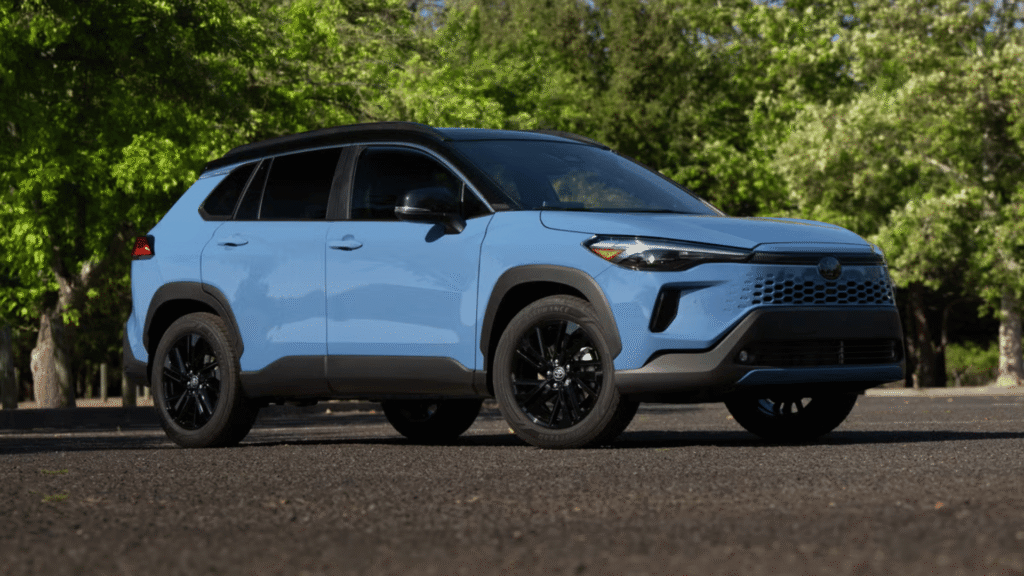
Rank 6: Toyota Corolla Cross (79/100) — The Hybrid Redemption Story
Toyota Corolla Cross vehicle is built for a very specific buyer: someone who wants a basic crossover with no unnecessary complexity. Simple, reliable, done.
Here’s where quality splits dramatically. The non-hybrid version gets legitimate criticism. The 2.0L engine is noticeably noisy under hard acceleration. The CVT drones. Some owners report vibrations at highway speeds—not dangerous, just fatiguing.
The hybrid Corolla Cross is a completely different vehicle. Real-world owners are seeing nearly 49 mpg. The driving feel is significantly better. The cabin is noticeably quieter. The hybrid is simply the objectively superior version—and Consumer Reports’ reliability data backs this up.
Minor quirks worth knowing: roof rails held on by double-sided tape (cosmetic risk on rough terrain), and weak 12-volt batteries on hybrid models that need regular driving to stay charged. Nothing catastrophic, just things to budget for mentally.
Verdict: Best for buyers who want dead-simple, reliable transportation without requiring attention or interpretation.
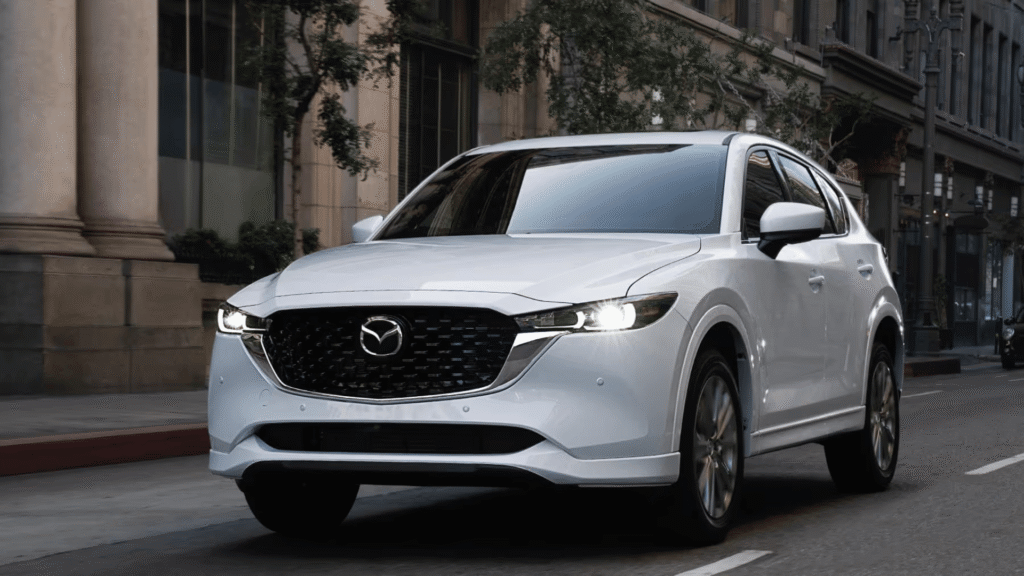
Rank 5: Mazda CX-5 (84/100) — Textbook Example of Aging Beautifully
Consumer Reports calls the Mazda CX-5 the gold standard of the “refined mainstream” category. Here’s the thing about the CX-5: it hasn’t had a radical redesign since 2017. Instead of chasing trends, Mazda did something smarter—they spent eight years refining the exact same platform.
The Skyactive naturally-aspirated 2.5L engine uses no turbos and no hybrid complexity. Paired with a six-speed automatic transmission (not a CVT), suspension tuning that gets incrementally better each year, the 2025 model specifically got new suspension tweaks and updated engine mapping.
A naturally-aspirated 2.5L engine is the automotive equivalent of a trustworthy friend. Simple. Proven. Built on decades of refinement. The transmission is smooth and predictable in a way CVTs fundamentally aren’t.
The CX-5 is one of the best examples of premium interior feel at a mainstream price point. Soft-touch materials, nice stitching, thoughtful details. It genuinely punches above its weight class inside.
With 5 million units produced globally as of 2025, that’s not just volume—that’s validation. Mazda’s supply chain, manufacturing consistency, and parts availability are bulletproof. When surveyed about interior feel and driving dynamics, reliable SUV models like the CX-5 rate satisfaction disproportionately high for the segment.
Verdict: Best for buyers who care about how a vehicle feels to drive and live with—not just reliability metrics.
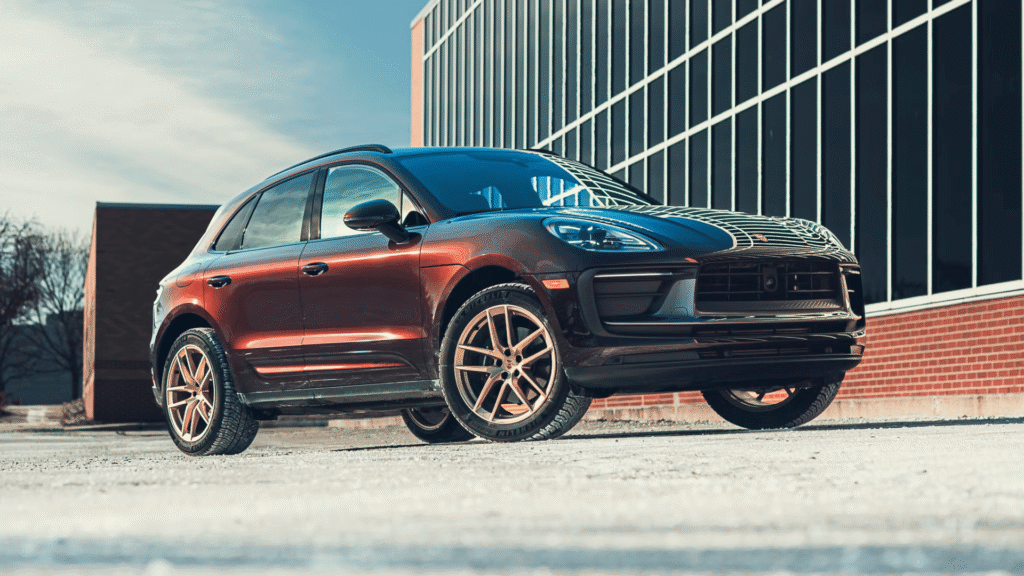
Rank 4: Porsche Macan (84/100) — The Luxury Paradox: Reliable But Not Cheap
Yes, a Porsche cracking the top four on a reliability list. This is not a mistake.
Here’s the straightforward reason why the Porsche Macan earns a place among the 9 Most Reliable SUVs 2026: Porsche has been refining the exact same Macan platform for over a decade. Owners consistently report excellent build quality, solid materials, and a chassis that doesn’t develop rattles or suspension slop at this price point.
Unlike many German luxury vehicles, the Macan rarely suffers catastrophic failures. But here’s the critical distinction between “reliable” and “affordable to maintain”—they’re very different things.
After about 40,000 miles—documented across Consumer Reports data—oil seeps from the valve cover and timing cover become common. Control arm bushings wear down. The PDK transmission starts clunking between reverse and drive. Repair bills in the $800 to $1,500 range become a regular part of ownership. None of it is catastrophic. All of it is expensive.
Porsche Macan owners report a clear pattern: years one through four are bulletproof. Year five onward, you’re budgeting $3,000-$5,000 annually for preventative and wear maintenance.
Consumer Reports data shows Macan buyers who budget for this reality report high satisfaction. Those who don’t expect the maintenance costs often express frustration. Expectation management is everything.
Verdict: An 84 means the Macan won’t leave you stranded. It absolutely does not mean it’ll be cheap to maintain. This is a vehicle for committed enthusiasts, not casual luxury seekers.
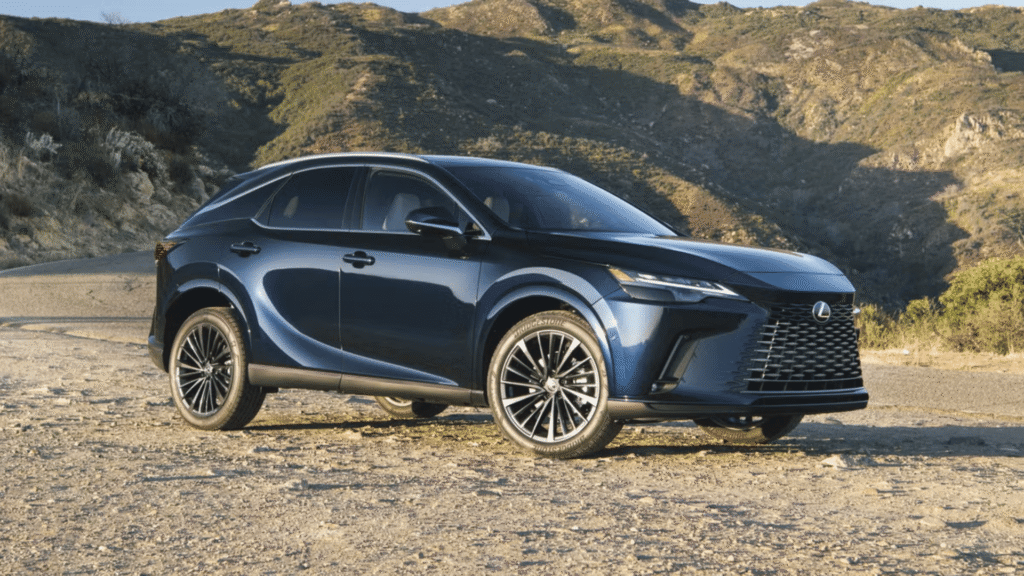
Rank 3: Lexus RX (84/100) — The Mechanical Masterpiece With One Achilles Heel
Consumer Reports notes something fascinating about the RX: the ownership experience is almost split in two.
On one hand, mechanically, the RX is superb. Long-distance commuters describe it as having essentially zero mechanical issues outside of one recurring problem. The ride is silky. The cabin is serene. Resale value is exceptional.
That one problem: the 12-volt battery. Especially on the hybrid version.
Here’s why: the hybrid system regularly disengages the alternator to save fuel. If you’re not driving frequently or doing mostly short trips, the 12-volt battery can drain and sulfate. Owners in warm climates like Southern California have reported mysterious no-start conditions out of nowhere—something you absolutely don’t expect from a $65,000 Lexus.
This is documented across Consumer Reports’ owner surveys. It’s not theoretical—it’s real, and it’s frustrating.
The RX also moved from a V6 to a 2.4L four-cylinder, and some longtime Lexus owners feel the engine noise and vibration is not what they expected from a luxury vehicle. Even so, the RX remains one of the 9 Most Reliable SUVs 2026 thanks to Lexus’ strong reputation for durability and low long-term ownership costs. Lexus released a TSB (Technical Service Bulletin) with an exhaust damper to address it, but for people who’ve been driving V6 Lexuses for years, the difference is genuinely noticeable.
Despite these issues, Consumer Reports shows RX owners report high overall satisfaction when they drive the vehicle regularly, replace the 12V battery proactively every 3-4 years, and accept the slightly more audible engine character.
Verdict: If you drive it regularly and stay ahead of the battery issue, the RX is still one of the best longest lasting SUVs on the market. Just know exactly what you’re dealing with.
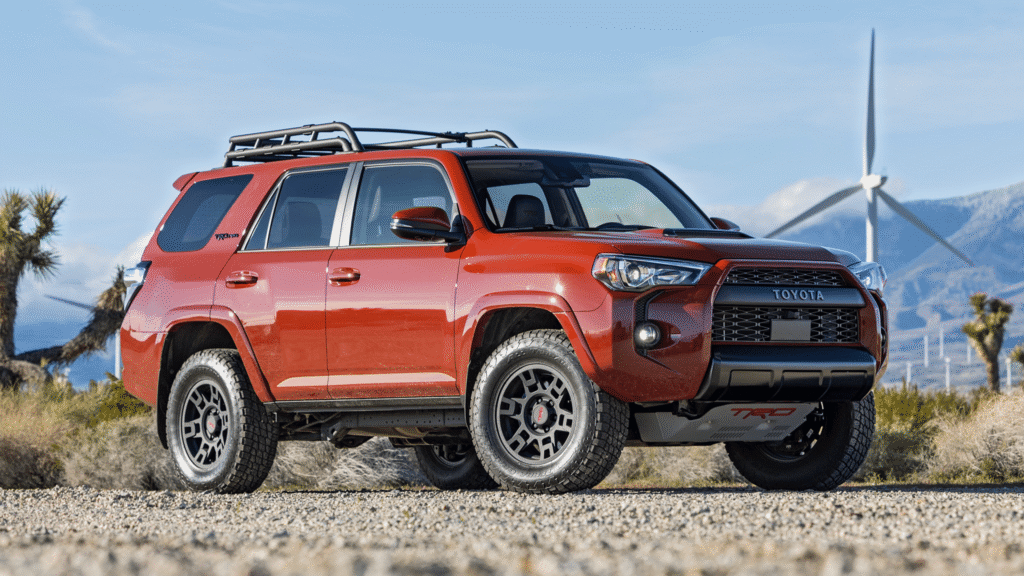
Rank 2: Toyota 4Runner (95/100) — The New Generation Statement
A 95/100 on a brand-new platform is genuinely bold. The fact that early owner data is backing it up suggests Toyota got the engineering right this time.
The 4Runner comes out of Toyota‘s Tahara plant in Japan—a facility with a documented obsession with quality. The engine building section reportedly runs at surgical room levels of cleanliness. That manufacturing environment matters, and it shows immediately in the output.
The new 2.4L turbocharged inline-four replaces the legendary 4.0L V6, which understandably made longtime 4Runner owners nervous. But here’s what Toyota’s engineers did: they tested this engine to industrial rather than commercial standards—specifically to match the durability of the outgoing V6.
Early owner data is backing that claim up. No catastrophic failures. No unexpected issues. The turbo integration is seamless.
The platform underneath is the TNGAF boxed steel ladder frame, which offers significantly more chassis rigidity and rust protection than the previous generation. Owners report noticeably less body flex and better long-term corrosion resistance.
The flagship I-Force Max hybrid puts out 460 lb-feet of torque. This is a serious truck, not a fuel economy compromise. It’s Toyota saying, “We’re keeping the capability intact while improving efficiency.”
Verdict: The 4Runner proves that new doesn’t have to mean unreliable. Sometimes engineering maturity applied to fresh platforms creates something genuinely special.
Rank 1: Honda Passport (97/100) — The Unreachable Standard
A 97 reliability score is simply not a number you see often in automotive reliability rankings. That is an exceptional achievement.
The Passport runs a 3.5L V6 paired with a 10-speed automatic. No turbos. No hybrid complexity. Just a mature, refined powertrain that Honda has been building and perfecting for over two decades.
The Alabama plant that builds it has produced more than 6.5 million V6-powered vehicles since 2001. At this point, they’re not ironing out bugs. They’re executing a perfected manufacturing process. The parts supply chain is rock-solid. Service is available anywhere.
Consumer Reports’ owner feedback is overwhelmingly positive. People love the cargo space. They love the comfort. They describe an old-school rugged feel, especially in the new Trail Sport trim. It’s a vehicle that doesn’t try too hard—it just works.
It’s not completely flawless. The 10-speed transmission gets some complaints at low speeds, hunting for the right gear and occasionally shuddering under light throttle. But here’s the critical word: minor. None of this leaves you stranded. None of it is structural.
The Passport has one of the highest owner satisfaction scores in Consumer Reports’ database. When asked if they’d buy again, owners don’t hesitate.
Verdict: The most reliable SUVs ranking is dominated by the Honda Passport. This is the vehicle for people who actually use their SUV. It handles what you throw at it, doesn’t break, and doesn’t surprise you with unexpected costs.
Comparison Table: All 9 Reliable SUVs Side-by-Side
| Rank | SUV | Score | Engine | Transmission | Best For |
|---|---|---|---|---|---|
| 1 | Honda Passport | 97/100 | 3.5L V6 | 10-Speed Auto | All-Purpose Users |
| 2 | Toyota 4Runner | 95/100 | 2.4L Turbo | 8-Speed Auto | New Gen Seekers |
| 3 | Lexus RX | 84/100 | 2.4L 4-Cyl | 8-Speed Auto | Luxury Commuters |
| 4 | Porsche Macan | 84/100 | 2.0L Turbo | PDK | Enthusiasts |
| 5 | Mazda CX-5 | 84/100 | 2.5L N/A | 6-Speed Auto | Refinement Seekers |
| 6 | Toyota Corolla Cross | 79/100 | 2.0L/Hybrid | CVT | Budget Buyers |
| 7 | Subaru Crosstrek | 78/100 | 2.0L | CVT | Maintenance-Focused |
| 8 | Toyota RAV4 | 77/100 | 2.5L N/A | 8-Speed Auto | Practical Buyers |
| 9 | Toyota Crown Signia | 77/100 | 2.5L Hybrid | CVT | Luxury Commuters |
Key Takeaways: Reliability vs. Maintenance Costs
Here’s something critical that separates these 9 Most Reliable SUVs 2026 from the rest: understanding the difference between SUV reliability ratings and actual ownership costs.
A vehicle can score high on reliability (meaning it doesn’t break often) but still be expensive to maintain when things do go wrong. The Porsche Macan is a perfect example—it won’t leave you stranded, but repairs cost significantly more than a Toyota RAV4.
Conversely, some vehicles require religious maintenance discipline (Subaru Crosstrek) to achieve their reliability potential. Others, like the Honda Passport, just work without demanding much from you.
Toyota dominates this list with four entries because they’ve perfected the balance: proven, simple engineering + reasonable repair costs + long-term durability. Honda’s Passport sits at the top for the same reason—reliability without complications.
Which Reliable SUV Should You Buy? (Buyer’s Guide)
Best for Budget-Conscious Buyers
The Toyota Corolla Cross (79/100) or Toyota RAV4 (77/100) are your answers. Both deliver dependable transportation without luxury price tags. The Corolla Cross edges ahead if you want better fuel economy; the RAV4 if you prioritize cargo space and proven longevity.
Best for Luxury Seekers
The Lexus RX (84/100) offers the most refined experience, assuming you stay ahead of 12V battery maintenance. The Porsche Macan delivers sportier dynamics but demands deeper pockets for maintenance. The Toyota Crown Signia offers quiet luxury at a lower price point.
Best for Off-Road Enthusiasts
The Toyota 4Runner (95/100) is purpose-built for this role. The Honda Passport (97/100) works too, offering rugged capability with legendary reliability. Both will genuinely handle what you throw at them.
Best for Daily Commuters
The Mazda CX-5 (84/100) feels the most refined for daily driving. The Toyota RAV4 (77/100) is the practical choice. The Lexus RX (84/100) if you want luxury comfort on your commute.
FAQ About SUV Reliability
Q: Is a brand-new SUV less reliable than an established model?
A: Not necessarily. The Toyota 4Runner scores 95/100 as a completely new generation, proving that engineering maturity applied to fresh platforms can work. However, established platforms like the Mazda CX-5 and Honda Passport benefit from years of refinement.
Q: Should I buy gas or hybrid for maximum reliability?
A: Gas engines (naturally-aspirated) tend to be slightly more reliable long-term. However, modern hybrids like Toyota’s system are proven and reliable. The hybrid trade-off is slightly higher maintenance complexity for better fuel economy.
Q: Which SUV has the lowest maintenance costs?
A: Honda Passport and Toyota RAV4. Both use simple, proven powertrains with parts available everywhere. The Porsche Macan, while reliable, has significantly higher repair costs.
Q: What mileage can I expect from these vehicles?
A: All nine should easily reach 150,000-200,000 miles with proper maintenance. The Passport and RAV4 frequently exceed 250,000 miles.
Final Verdict: The Winner is Clear
The Honda Passport (97/100) stands alone at the top of the 9 Most Reliable SUVs 2026 for a reason. It combines exceptional reliability with simplicity, affordability, and owner satisfaction. It doesn’t try too hard—it just works.
But the “best” most reliable SUVs depends on your priorities:
- Pure reliability + value: Honda Passport
- New generation innovation: Toyota 4Runner
- Refined mainstream driving: Mazda CX-5
- Practical dependability: Toyota RAV4
- Luxury comfort: Lexus RX
All nine vehicles on this list earned their place among the 9 Most Reliable SUVs 2026 and will deliver years of dependable service when maintained properly. Consumer Reports’ data confirms it. Real owners confirm it. The question isn’t whether they’re reliable—it’s which one matches your priorities, budget, and driving life.
Conclusion & Call-to-Action
Reliability matters. Whether you’re planning a decade of ownership or looking for a vehicle that won’t surprise you with unexpected repair bills, these nine SUVs represent the best the market has to offer in 2026.
Consumer Reports’ data doesn’t lie. Thousands of real owners report fewer problems, longer service intervals, and greater satisfaction with these vehicles than alternatives.
Your next step is deciding which of these nine aligns with your needs. Are you prioritizing maximum reliability? Go with the Passport. Want new-generation technology? The 4Runner delivers. Need luxury refinement? The CX-5 or RX have your name on them.
Which of these 9 Most Reliable SUVs 2026 would you choose? Share your pick in the comments below. And if you found this breakdown helpful, subscribe to stay updated on reliability rankings, ownership guides, and honest vehicle reviews. Your next vehicle purchase might depend on it.
You can read all blogs by clicking here.