
When Your Car Stops Being an Asset (and Starts Stealing Your Future)
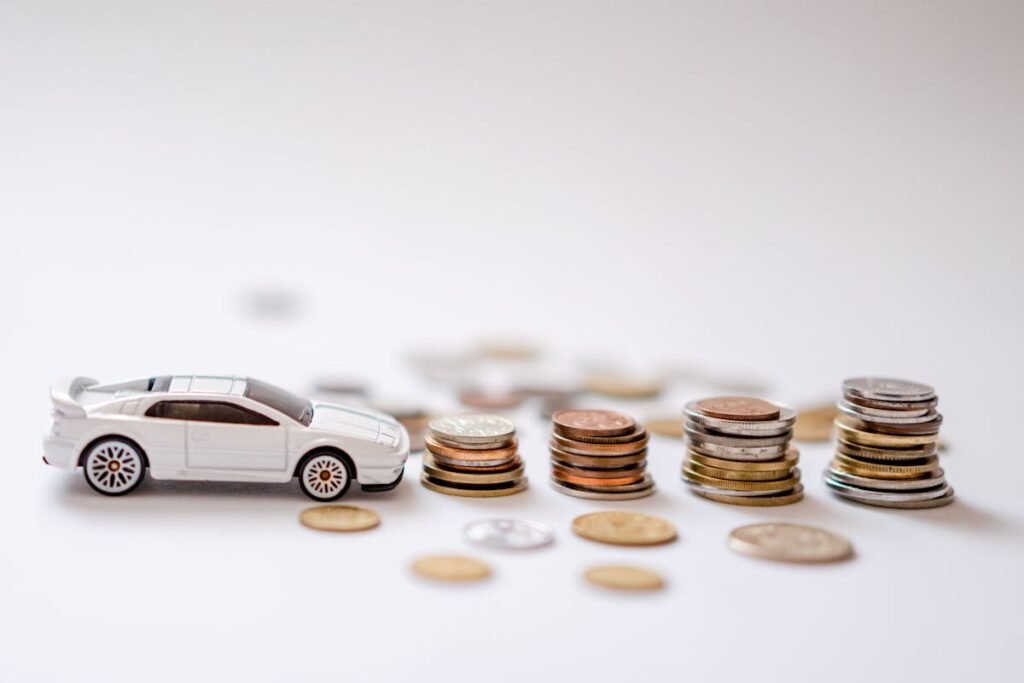
Most people think a car stops being an asset when it’s worth less than what you owe. That’s negative equity, and yeah, that’s bad.
But there’s a second, quieter moment that’s actually worse. It’s when your car starts bleeding money on two fronts simultaneously. And once it starts, every month you hold onto that car, you’re not just losing money, you’re losing what that money could become.
The average American will own 9 to 12 cars in their lifetime, so understanding this double drain isn’t just helpful, it’s how you avoid turning a $4,000 winning bid into a $15,000 mistake. Let’s get into it.
The Visible Breaking Point
So first, the obvious part. The visible drain. This is the repair cost threshold that financial advisors have been screaming about for decades, and yet people still ignore it constantly.
There’s a rule in automotive finance called the 50% rule. Dead simple.
If a single repair costs more than 50% of your car’s current market value, you don’t do the repair. You sell the car, you trade it in, you donate it to charity for the tax writeoff, I don’t care, but you do not spend that money.
Why? Because you’re essentially buying half of another car that’s already broken. Think about it. You’ve got a vehicle worth $7,000. It needs $3,800 in engine work. You’re about to spend $3,800 to own a $7,000 car. For that same $3,800, you could put a down payment on a $15,000 vehicle that actually runs.
But people do it anyway. All the time. I’ve seen it at auctions constantly, somebody buys a high-mileage SUV for $3,500, then dumps $2,000 into it immediately, and acts surprised when it needs another $1,800 in work 6 months later.
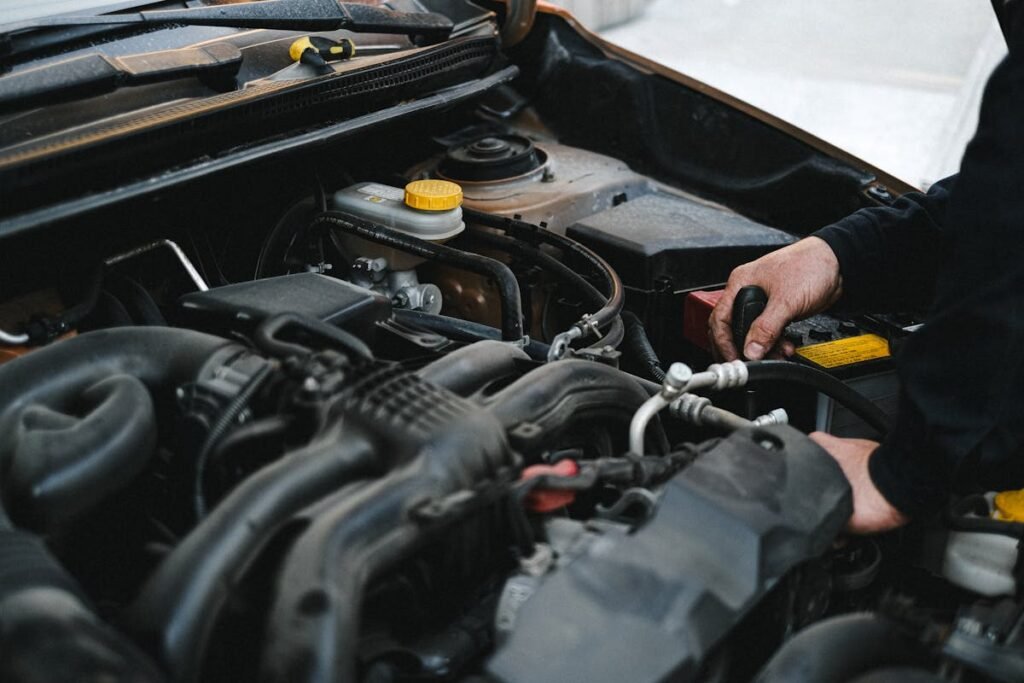
Here’s what the data actually shows. AAA’s 2025 study found that the average vehicle ownership cost is $11,577 per year when you factor in everything. Depreciation, fuel, maintenance, insurance, registration, all of it. That breaks down to about $965 per month.
Now, the study also found that maintenance and repairs alone cost drivers about 9.83 cents per mile. If you’re driving the typical 15,000 miles per year, that’s $1,474 annually just for keeping the thing functional. But here’s the thing, that’s an average. That number assumes you’ve got a relatively healthy car, something in that 3 to 7 year old sweet spot. Once you cross into high-mileage territory, that number explodes.
And there’s a specific cliff where this happens. Around 150,000 miles. Sometimes it’s 180,000, sometimes it’s 120,000 depending on the make and how well it was maintained, but there’s always a cliff. It’s not one big failure. It’s cascading failures. See, rubber components all age at roughly the same rate. So do electrical systems. Your serpentine belt, your hoses, your bushings, your motor mounts, they’re all deteriorating on similar timelines. When one goes, the others are right behind it.
Here’s the threshold you need to burn into your brain: when your annual repair costs exceed what a monthly payment would be on a replacement vehicle, you’re past the breaking point. Let’s say you’re averaging $320 a month in repairs. That’s $3,840 per year. You could take that same money and finance something significantly newer. But people don’t think in annual terms. They think in incidents. “Oh, it’s just the alternator.” “Oh, it’s just the brakes.” They don’t add it up. They don’t see the pattern. And this is where the visible drain becomes a trap.
Because once you’ve spent $1,200 on repairs, there’s a psychological phenomenon that kicks in. It’s called the sunk cost fallacy. You think “well, I’ve already put $1,200 into it, I can’t quit now, I need to protect that investment.” So you spend another $900. Then another $650. Each time, you’re thinking about the money you’ve already spent, not the money you’re about to lose. And at some point, you’ve spent $5,000 in repairs on a $6,000 car, and you still don’t have a reliable vehicle. You just have a $6,000 car with $5,000 in recent repairs that’s probably going to need another $1,500 soon.
This is the visible drain. Everyone can see it. Everyone knows it’s happening. But they convince themselves they’re almost through it. That this repair will be the last one for a while. It never is. Not at this mileage. Not at this age.
But here’s where it gets worse. Because the visible drain, as bad as it is, is only half the problem. The other half is invisible. And it’s actually more expensive over time. This is the part that nobody talks about. The opportunity cost. The money you’re spending on repairs isn’t just gone. It’s gone from a place it could have been working for you. And when you compound that loss over years and decades, the numbers get terrifying.
The Invisible Wealth Killer
Let me show you how this works with real numbers, because this is where people’s brains shut off. They hear “opportunity cost” and they glaze over. But stick with me for 90 seconds because this is the single most important financial concept in car ownership that almost nobody understands.
You’ve got that $3,200 transmission repair we talked about in the opening. You spend it. The car works again. Great. But what if you hadn’t spent it? What if you had taken that $3,200 and put it in a basic index fund earning 5% annually? Not some aggressive crypto bet, just boring, standard market returns. In 20 years, that $3,200 becomes $8,492. You just gave up $8,492 to fix a transmission that’s going to fail again eventually anyway. Now let’s scale this up. The average new car loses about $6,500 in value in its first year just from depreciation. That’s money that evaporates. Now imagine you bought a 2-year-old car instead and saved that $6,500. Over a lifetime, buying 10 cars this way instead of new, and investing those savings, you’d have $437,535 by age 75. That’s not a theoretical number. That’s compound interest math. That’s real money you’re giving up every time you make an inefficient car decision.
Now apply this to the repair spiral we just talked about. You’re spending $320 a month on average keeping a dying car alive. That’s $3,840 per year. Let’s say you do this for 3 years before you finally give up and replace the vehicle. You’ve spent $11,520 in total repairs. If you had replaced the car 3 years earlier and invested that $320 per month instead at 5% returns, you’d have $12,471 after those 3 years. You didn’t just lose $11,520. You lost the opportunity to turn it into $12,471. That’s a swing of almost $24,000 in total financial position.
And here’s the part that really hurts: this compounds. Every dollar you waste on an inefficient car is a dollar that can’t start compounding today. Which means it’s also not compounding tomorrow, or next year, or in 10 years. Time in the market beats timing the market, every investor knows this. But car owners don’t think of repair money as investment money. They think of it as “well, I have to have a car, so this is just the cost.” No. You have to have transportation. The question is whether you’re buying that transportation in the most efficient way possible, or whether you’re lighting money on fire because you’re emotionally attached to a machine.
Let me give you one more example because I want this to really sink in. The average person keeps a car for about 8 years according to IHS Markit data. Let’s say you keep a high-mileage vehicle from year 8 to year 11, spending an average of $2,400 per year in repairs beyond normal maintenance. That’s $7,200 total. If instead you had traded that car in year 8, taken that $2,400 per year and invested it, by year 30 of your career you’d have an extra $19,847 just from those 3 years of repair costs you avoided. That’s not counting what you could have done with the money from years 11 through 30.
This is what I mean by the invisible wealth killer. You can see the mechanic bill. You can’t see the $19,847 you just gave up. But it’s gone. And once time passes, you can’t get it back. Compound interest only works if you give it money to compound. Every dollar tied up in a depreciating asset is a dollar that’s not working for you.
So now you see both drains. The visible one, repair costs exceeding vehicle value. And the invisible one, opportunity costs exceeding what those repairs will ever be worth in the long run. But here’s the critical question: when do both of these hit at the same time? Because that’s the inflection point. That’s the moment a car definitively stops being an asset and becomes a wealth extraction machine working against you on two fronts. And if you can identify this moment, you can get out before the damage gets catastrophic.
The Double Drain Decision Point
The double drain hits when three conditions exist simultaneously.
Condition one: your repair costs are approaching or exceeding 50% of the vehicle’s value in a single incident, or your annual repair costs are exceeding what a monthly payment would be on a replacement. This is the visible drain I talked about. You can feel this one. It hurts your checking account today.
Condition two: you’re in high-mileage territory where cascading failures are either happening now or imminent. This usually means over 150,000 miles, sometimes over 120,000 for certain brands. This is the technical reality. Systems are failing on similar timelines, meaning more failures are coming whether you fix this one or something else breaks next month.
Condition three: you have money going into repairs that could otherwise be deployed for wealth building. This sounds obvious, but think about it. If you’re barely scraping by, if every dollar is already spoken for, if you’re in pure survival mode, then opportunity cost is kind of irrelevant because you don’t have the option to invest anyway. You’re just trying to get to work.
But if you have any financial breathing room at all, then every dollar you spend on repairs is a dollar you’re choosing not to invest. That’s the invisible drain.
When all three conditions exist, you’re in the double drain. And here’s what makes it so dangerous: it’s self-reinforcing. The more you spend on repairs, the less you have to invest. The less you invest today, the less you have compounding tomorrow. Meanwhile, the car keeps aging, which means more repairs are coming, which means more money you can’t invest. It’s a death spiral.
Conclusion
Look, cars are tools. They get you from point A to point B. They’re not investments unless you’re in the very narrow collector market. They’re expenses. And like any expense, you want to minimize them, especially when minimizing them means you have more money to actually build wealth with.
The double drain is real. The visible part, repair costs exceeding value, everyone can see that. But the invisible part, the opportunity cost of money that could be compounding, that’s where the real damage happens. And when both hit at the same time, when you’re dumping money into a high-mileage vehicle that could be growing elsewhere, that’s when a car definitively stops being an asset and becomes a wealth extraction machine.
Run the numbers on your current vehicle. Be honest about the mileage, the condition, what repairs are coming. Calculate what you’re spending monthly on average. Then calculate what that money could become if you invested it instead. If you’re in the double drain, you’ll know. And once you know, you can’t unknow it.
If this changed how you think about car ownership, hit subscribe. I break down the financial side of buying, selling, and owning vehicles every week.
