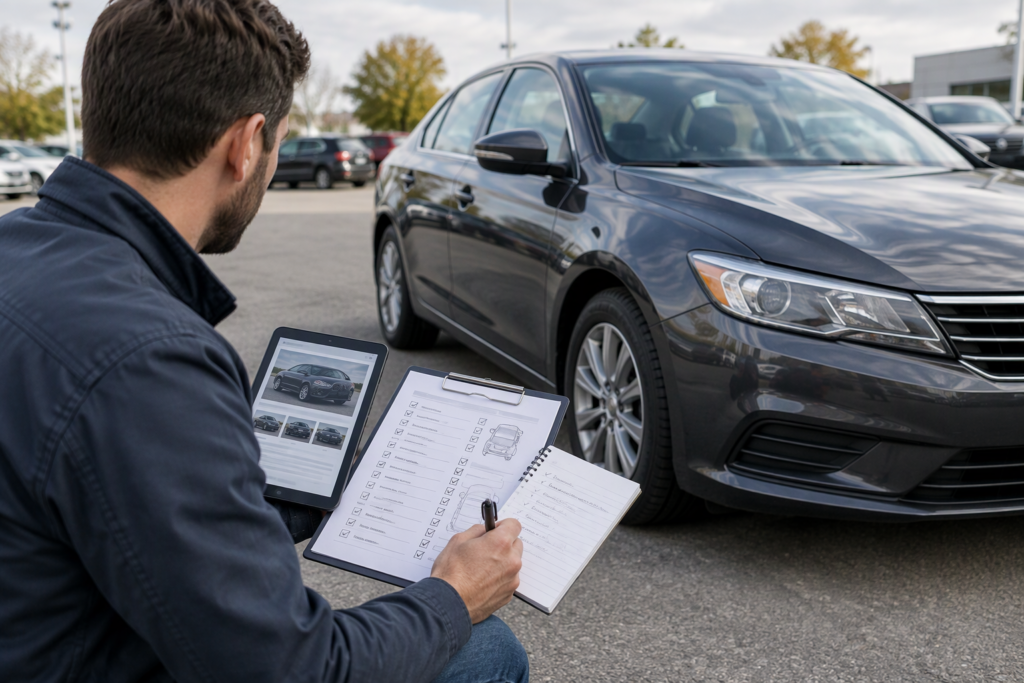
Yes, you can catch many expensive engine problems before you buy a used car. Start with a cold engine, check the oil and coolant, inspect for leaks, watch the exhaust, scan for fault codes, and drive the car long enough to reach normal temperature. Then pay for an independent inspection. A shiny engine bay proves only that somebody found a hose.
The quick engine check
- See the car cold, not already warmed up.
- Match the VIN and service history before trusting the seller’s story.
- Check oil level, oil condition, coolant level and signs of mixing.
- Look for fresh leaks, crusty residue, broken fasteners and non-factory repairs.
- Listen for knocks, rattles, chain noise and uneven idle.
- Watch the exhaust during cold start, acceleration and deceleration.
- Scan the vehicle and check readiness monitors before buying.
- Get a written pre-purchase inspection with a compression or leak-down test when symptoms justify it.
1. Insist on a genuinely cold start
Ask the seller not to start the car before you arrive. Touch the upper radiator hose only when safe, or use an infrared thermometer if you have one. A warm engine can hide hard starting, blue smoke, noisy timing components and an overheating problem that appears only from cold.
On startup, the warning lights should illuminate briefly and then go out after the engine runs. If the check-engine light never appears during the key-on self-test, ask why. It may have been disabled rather than repaired.
2. Check the oil properly
Park on level ground and follow the owner’s-manual procedure. The oil should be between the marks, not several quarts low and not mysteriously overfilled. Low oil can point to consumption or leaks; overfilled oil can be a sloppy service job or an attempt to mask a problem.
Look for thick sludge under the filler cap, glitter-like metal and a strong fuel smell. A little brown staining is not automatically a death sentence, especially on an older engine, but heavy sludge plus poor records deserves a technician’s opinion. Do not diagnose an engine from oil color alone; oil-change intervals and engine design matter.
3. Inspect coolant and signs of overheating
Only open a pressurized cooling system when the engine is fully cold. The reservoir should not be empty, oily or full of unexplained debris. Look around the radiator, water pump area, thermostat housing, hoses and reservoir for wetness or dried white, pink, green or orange residue, depending on the coolant used.
Watch the temperature gauge during the drive. It should settle near its normal position and stay there. A gauge that rises in traffic, falls oddly, or moves with cabin-heater use is a reason to stop and investigate. Overheating can damage head gaskets, cylinder heads and catalytic converters, turning a modest used-car bargain into a very expensive ornament.
4. Look underneath, not just under the bonnet
Use a flashlight. Fresh oil on a dirty engine can mean an active leak; a completely spotless, freshly washed engine deserves questions. Check the front and rear crankshaft areas, valve covers, oil pan, turbocharger plumbing where fitted, coolant hoses and the ground after the road test.
Do not crawl under a car supported only by a jack. Ask the inspection shop to put it on a lift. A proper inspection can spot seepage, damaged splash shields, oil on the subframe, exhaust repairs and evidence that the engine has been removed.
5. Listen for the noises that matter
- Deep knock: stop driving and have it diagnosed before purchase.
- Sharp ticking: may be normal injector noise on some engines, or it may point to valvetrain or oil-pressure trouble.
- Rattle at startup: can be harmless heat shielding, but it can also be timing-chain or tensioner wear.
- Whine: check accessory pulleys, alternator, power steering and turbo components.
- Uneven idle: consider ignition, vacuum, fuel, compression or emissions faults.
Record the sound on your phone, but do not let a recording replace a mechanic. Engines are not choirs; they rarely improve with wishful thinking.
6. Watch the exhaust in different conditions
A little white vapor on a cold morning can be normal condensation. Persistent thick white smoke after warm-up can indicate coolant entering the combustion chambers. Blue smoke usually means the engine is burning oil. Black smoke can indicate an overly rich mixture or an emissions-control problem.
Have someone follow safely while you accelerate and then lift off the throttle. Smoke that appears only on acceleration, only after idling, or only on deceleration gives a technician useful clues. Never stand in traffic to perform this test.
7. Use a scan tool—but read it correctly
Scan the car for diagnostic trouble codes and check whether the readiness monitors are complete. Recently cleared codes can leave monitors incomplete, which means the seller may have reset the computer shortly before you arrived. An empty code screen is not proof that the engine is healthy, and a stored code is not automatically a $5,000 repair. It is a lead that needs diagnosis.
Also check for warning lights after the road test. Some faults appear only after the engine is hot, under load or during an emissions self-test.
8. Test the engine under load
Drive at city speed, steady highway speed and up a safe incline. The engine should start cleanly, pull without major hesitation and return to a stable idle. Watch the temperature, oil-pressure warning, charging voltage if displayed, and any change in smoke or smell.
Do not abuse the car to prove a point. A few normal acceleration runs are enough. If the seller will not allow an independent drive or inspection, treat that refusal as information.
9. When compression or leak-down testing is worth paying for
Ask for compression testing or a leak-down test when the engine has low power, misfires, heavy blow-by, uneven compression symptoms, smoke, coolant loss or suspicious noises. These tests can help distinguish a plug or coil problem from worn rings, valves or a head-gasket issue, but results must be interpreted for that engine and compared across cylinders.
A compression number copied from a random internet forum is not a universal pass mark. Manufacturer procedures, test temperature, throttle position and gauge accuracy matter.
Engine inspection checklist before you make an offer
- Cold-start video or in-person cold start completed.
- Oil and coolant checked safely and at the correct levels.
- No unexplained active leak or fresh wash-down.
- No persistent blue, white or black smoke.
- Warning lights pass the key-on self-test and remain off after driving.
- Scan-tool codes and readiness monitors reviewed.
- Temperature remains stable in traffic and on the open road.
- Service records support the mileage and maintenance story.
- Independent written inspection completed before deposit or final payment.
How much should an engine problem change your offer?
Do not subtract a guess from the seller’s asking price. Get a written estimate from a shop that is not paid by the seller, add a reasonable contingency for related work, and compare the result with the car’s market value. If the repair risk is uncertain, value the uncertainty as a risk—not as a discount you hope will cover it.
Before you negotiate, run the vehicle through the Bidding For Autos Deal Check to estimate what the car is worth, what to pay and when to walk away. For the wider history-and-condition review, see how to evaluate a used-car listing before you visit. If the car also shows water clues, use our flood-damage inspection guide.
Bottom line: A used engine does not need to be spotless to be a good buy. It needs to start cold, run steadily, stay at the right temperature, show believable maintenance and survive an independent inspection. If the seller blocks those checks, walk away. Your money will find another car.