
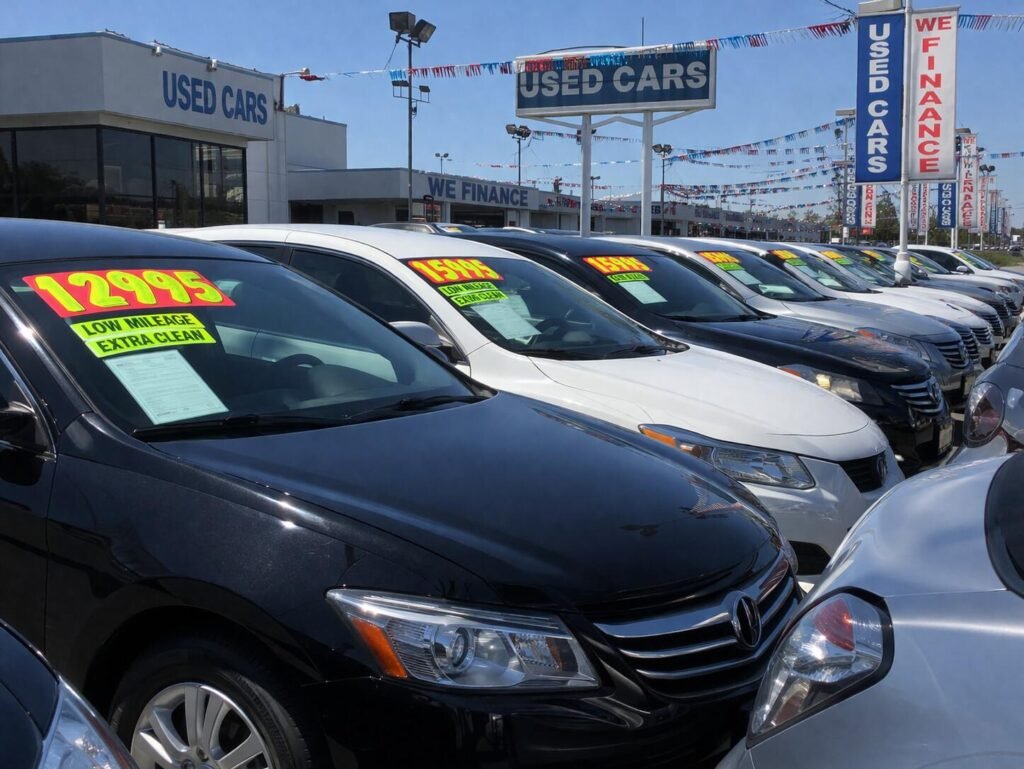
If you’ve started shopping for a used car, you’ve probably already noticed the problem: every source tells you a different number.
The dealer’s sticker says one thing. KBB says another. Edmunds disagrees with both. Your buddy who “knows cars” swears you’re getting ripped off, and the salesman swears you’re getting the deal of the century. None of them are lying to you, exactly — they’re just each looking at a different slice of the picture, and none of them are looking at the one number that actually matters: what a car like this one, in this condition, with this history, is really worth to you, out the door, today.
This guide walks you through that process step by step: find the car, determine its market value, compare it against similar listings, calculate the true out-the-door price, check your financing, negotiate with actual leverage, and — before you sign anything — run the deal through BFA Deal Check to catch anything you missed.
The good news is that figuring out a fair price isn’t complicated. It just takes a process — the same process a good used car buyer runs every single time, whether they’re shopping for a $9,000 commuter car or a $45,000 truck. Skip the process and you’re negotiating blind. Follow it and you’ll walk into any dealership or private sale knowing more about the car’s real value than the person selling it to you.
Let’s get into it.
Step 1: Find the Car (The Right Way, Not the Fast Way)
Most car shopping mistakes happen before anyone even talks about price. They happen at the search stage, when buyers fall in love with the first decent-looking listing and stop looking.
Casting a wide net matters more in 2026 than it used to. Used inventory has become more regionally uneven — some markets are flush with certain models and thin on others, and prices for the same car can swing by thousands of dollars depending on which state you’re shopping in. A car that looks like a great deal in your city might be priced completely normally three states over, or vice versa.
Search across multiple platforms, not just one. Dealer sites, Autotrader, Cars.com, CarMax, Carvana, Facebook Marketplace, and local classifieds all pull from different inventory pools. A search on just one site gives you a partial picture. Pull listings from at least three or four sources before you start narrowing down.
Widen your radius before you narrow your options. If you’re only looking within 20 miles of home, you’re seeing a fraction of what’s actually available. Expanding to 100–150 miles often reveals the same trim and mileage for noticeably less money — sometimes enough to cover the cost of a flight or a long drive to pick it up.
Filter by more than price and mileage. Two cars with identical prices and mileage can be worlds apart in actual value. Pay attention to:
- Number of previous owners
- Whether it’s a one-owner car or has changed hands multiple times
- Accident history flags on the listing (even before you pull a full report)
- Service records, if the listing mentions them
- How long the car has been sitting on the lot (a car that’s been listed for 90+ days is often a sign the price is too high, or something about it is scaring buyers off)
Build a shortlist of at least 5–8 comparable listings, not just one or two. You need enough comparable cars to actually establish a market — one listing tells you nothing about what’s fair, it just tells you what one seller wants.
This is also the stage where mileage should start taking a back seat to something more important: maintenance. A car with 90,000 miles and a full service history is very often a better buy than a car with 60,000 miles and no records at all. Mileage tells you how far the car has traveled. Maintenance tells you how well it was treated along the way — and treatment matters more to a car’s remaining lifespan than distance does. Keep that in mind as you build your shortlist; don’t let a low odometer number talk you out of otherwise stronger candidates.
Step 2: Determine the Car’s Actual Market Value
Once you’ve got a shortlist, it’s time to figure out what the car is actually worth — not what one seller is asking, but what a reasonable, informed buyer should expect to pay.
Start with pricing guides, but treat them as a starting point, not gospel. Kelley Blue Book, Edmunds, and NADA/J.D. Power each generate a value estimate based on year, make, model, trim, mileage, and condition. These are useful for a ballpark, but they lag the real market and rely on self-reported condition ratings that are easy to overstate.
Cross-reference with actual sold listings, not just active ones. This is the step most buyers skip, and it’s the one that matters most. Anyone can list a car for whatever number they want — that tells you what someone hopes to get, not what buyers are actually paying. Sites that show recently sold or off-market comparable listings (or a dealer’s own sales history, if you can get it) give you a far more honest picture of real transaction prices.
Adjust for condition, not just specs. A pricing guide can’t see the car in front of you. Two identical trims with identical mileage can differ by $2,000–$4,000 in real value depending on:
- Tire and brake wear
- Interior condition (stains, cracked dash, worn seats)
- Paint and body condition
- Whether it needs anything mechanically in the near term
- Title status (clean vs. rebuilt/salvage — the latter can mean a 20–40% value hit)
Factor in regional and seasonal variation. Convertibles and trucks often carry seasonal premiums or discounts. 4WD and AWD vehicles are worth more in northern climates and less in places that never see snow. A fair national “market value” doesn’t always reflect what’s fair in your specific region.
Look Beyond the Sticker Price
By the end of this step, you shouldn’t have one number — you should have a realistic range. Something like “this car, in this condition, should sell for $19,500–$21,000” is far more useful than a single figure, because it gives you room to negotiate intelligently rather than anchoring to one guide’s opinion.
Now take that shortlist from Step 1 and actually compare the cars against each other, apples to apples.
This is where a lot of buyers get sloppy. They compare price alone, see that Car A is $1,200 cheaper than Car B, and assume Car A is the better deal. But price without context is meaningless. The real question isn’t “which one costs less” — it’s “which one costs less for what you’re actually getting.“
Build yourself a simple comparison, even if it’s just a notes app list, with these categories for each car:
- Price
- Mileage
- Age (model year)
- Trim level and options
- Accident/title history
- Number of owners
- Service history availability
- Distance from you (factors into pickup logistics and any travel cost)
- How long it’s been listed
When you lay it out this way, patterns tend to jump out immediately. Maybe the “cheaper” car has a rougher accident history. Maybe the pricier one includes a trim package that’s worth $1,500 on its own. Maybe the one that’s been sitting for 60 days is overpriced, and the one that sold in a week was priced right.
Pay close attention to cost per mile of remaining useful life, not just sticker price. A car with higher mileage but meticulous maintenance records and a clean title can easily be the smarter buy over a lower-mileage car with a spotty history — because what you’re really buying isn’t a number on an odometer, it’s however many years of reliable driving are left in the vehicle. A well-maintained higher-mileage car often has more of that left in it than a neglected low-mileage one.
This step is also where you should be honest with yourself about which “deal” is actually a deal, and which one just looks like one because it’s priced aggressively to move fast — sometimes because something’s wrong with it.
Step 4: Calculate the True Out-the-Door Price
This is the step that trips up more buyers than any other, because the number on the windshield is almost never the number you’ll actually pay.
The out-the-door price is the full amount that leaves your bank account (or gets financed) to drive the car home — sticker price plus every fee, tax, and add-on, minus any trade-in credit or rebate.
Here’s what typically gets added on top of the advertised price:
- Sales tax — varies significantly by state, and in some states, by county or city on top of that
- Title and registration fees
- Documentation (“doc”) fees — legal, but wildly inconsistent; can range from under $100 to several hundred dollars depending on the dealer and state
- Dealer add-ons — VIN etching, nitrogen tire fill, paint protection, fabric protection, extended warranties bundled in without a clear ask. Some of these have real value; many are pure markup on products that cost the dealer very little
- Destination or prep fees, occasionally
- Any financing add-ons rolled into the loan rather than paid separately
And here’s what can reduce it:
- Trade-in value, if you’re trading a vehicle in
- Manufacturer or dealer rebates, more common on certified pre-owned vehicles
- Negotiated discounts on doc fees or add-ons (yes, some of these are negotiable, even when a dealer says they’re not)
The gap between advertised price and true out-the-door price can easily run $1,500 to $3,000 or more, especially at dealerships that pack multiple add-ons into every deal by default. This is exactly why comparing “sticker prices” across listings, without accounting for what each dealer tacks on afterward, can lead you to the wrong conclusion about which car is actually cheaper.
Before you ever sit down at a dealership, ask for an out-the-door price quote in writing or email, itemized line by line. Any dealer unwilling to give you that breakdown before you’re sitting in the finance office is a dealer worth being cautious with.
Step 5: Check Your Financing Before You Talk Numbers
Financing is where a fair price on paper can quietly turn into a bad deal in practice — and it’s the step most buyers handle last, when it should be handled early.
Get pre-approved before you shop, not after you’ve picked a car. A pre-approval from your bank, credit union, or an online lender gives you two things: a real sense of what rate you actually qualify for, and leverage. Walking into a dealership with financing already lined up means you’re negotiating from a position of strength — the dealer now has to beat your rate to earn your financing business, rather than you having to trust whatever number they hand you.
Compare APR, not just monthly payment. This is the single most important financing rule, and it’s the one dealers rely on buyers forgetting. A lower monthly payment can hide a longer loan term or a higher interest rate — both of which cost you significantly more over the life of the loan. Two loans with the same monthly payment can differ by thousands of dollars in total interest depending on term length and rate. Always ask for the APR and the total loan term, and do the math on total cost, not just the number that fits your monthly budget.
Watch loan terms stretching past 72 months. Longer terms lower the payment, but they also increase the odds you’ll be “upside down” — owing more than the car is worth — for a large chunk of the loan, which becomes a real problem if you need to sell or trade in early.
Understand how add-ons affect your financed amount. Extended warranties, gap insurance, and other products are sometimes worth having — but when they’re rolled into the loan rather than paid separately, you’re paying interest on them for years. Know what’s being added to the principal before you sign, not after.
If a dealer’s financing rate comes in lower than your pre-approval, verify it’s a genuine rate and not a rate that depends on also buying add-ons. Some “special” dealer rates are conditional on purchasing warranty packages or other products — read the conditions, not just the headline number.
Getting financing sorted before negotiation means the price conversation and the payment conversation stay separate, which is exactly how you want it. Dealers who blend the two — talking only in monthly payments — are usually doing so because it’s easier to hide a bad deal inside a payment number than inside a price.
Step 6: Negotiate With Actual Leverage
By this point, you’re not walking into a negotiation with a gut feeling about what’s fair — you’re walking in with a real number, backed by comparable sales, and a financing offer in hand. That’s the difference between negotiating and hoping.
Lead with your researched range, not the dealer’s asking price. If your research puts the car’s fair value at $19,500–$21,000 and it’s listed at $22,500, don’t start by asking for a small discount off their number. Start from your number and work toward the middle, and be ready to explain why — cite the comparable listings, the condition issues, the time it’s been sitting.
Negotiate the out-the-door price, not the monthly payment. Once you agree to talk in monthly payment terms, you’ve lost your best tool for spotting a bad deal. Keep the conversation anchored to the total number leaving your account.
Separate the trade-in conversation from the purchase price conversation. Dealers sometimes offer a strong price on the car you’re buying while quietly lowballing your trade-in (or vice versa), because most buyers only track one number at a time. Negotiate each independently, and don’t let the two get blended into a single “deal” you can’t fully evaluate.
Be willing to walk away — and mean it. This is the single most effective negotiating tool that exists, and it costs nothing to use. If a dealer won’t move toward a fair number, thank them for their time and leave. Cars sitting on a lot cost the dealer money every single day; a walked-away buyer with a real offer often gets a call back within 24–48 hours.
Get everything in writing before you’re in the finance office. Verbal agreements on price have a way of “shifting” once paperwork starts. Confirm the agreed price, trade-in value, and any add-ons in writing beforehand so the numbers in the finance office match what you actually agreed to.
Don’t let add-ons get slipped in during financing. This is the classic moment where a fair deal quietly becomes an unfair one — extended warranties, paint protection, and other products get presented as routine when they’re entirely optional. It’s fine to decline any of them, even if the finance manager frames it as unusual.
Step 7: Run the Deal Through BFA Deal Check
Even after all six steps, it’s easy to miss something — a maintenance red flag buried in a service record, an accident that shows up in one report but not another, a price that looked fair on paper but doesn’t hold up against real comparable sales once someone runs the full numbers.
That’s exactly what BFA Deal Check is built to catch. Before you sign anything, it’s worth having a second, independent set of eyes review the actual deal in front of you — the specific VIN, the specific price, the specific terms — and flag anything that doesn’t add up. A quick review can tell you whether you’re looking at a Smart Buy, a Risky deal, or one you should Walk Away from, based on the real condition and history of that exact car, not just general pricing guide averages.
It’s the same idea as getting a second opinion before a major purchase in any other area of life — except here, it takes minutes, and it can save you from a mistake that would otherwise cost thousands.
Putting It All Together
None of these seven steps is complicated on its own. Find the car. Determine its real market value. Compare it honestly against similar listings. Calculate what you’ll actually pay out the door. Line up financing before you negotiate. Negotiate the total price, not the payment. And before you sign, run the deal through one more check.
What makes the process powerful is doing all seven, in order, every time — not skipping to the negotiation because you’re excited about a car, and not trusting a single pricing guide number without checking it against real sales. Buyers who follow this process consistently end up paying fair prices for good cars. Buyers who skip steps end up finding out what they missed after it’s too late to do anything about it.
Take your time. Do the homework. The car will still be there tomorrow — and if it isn’t, there’s always another one.