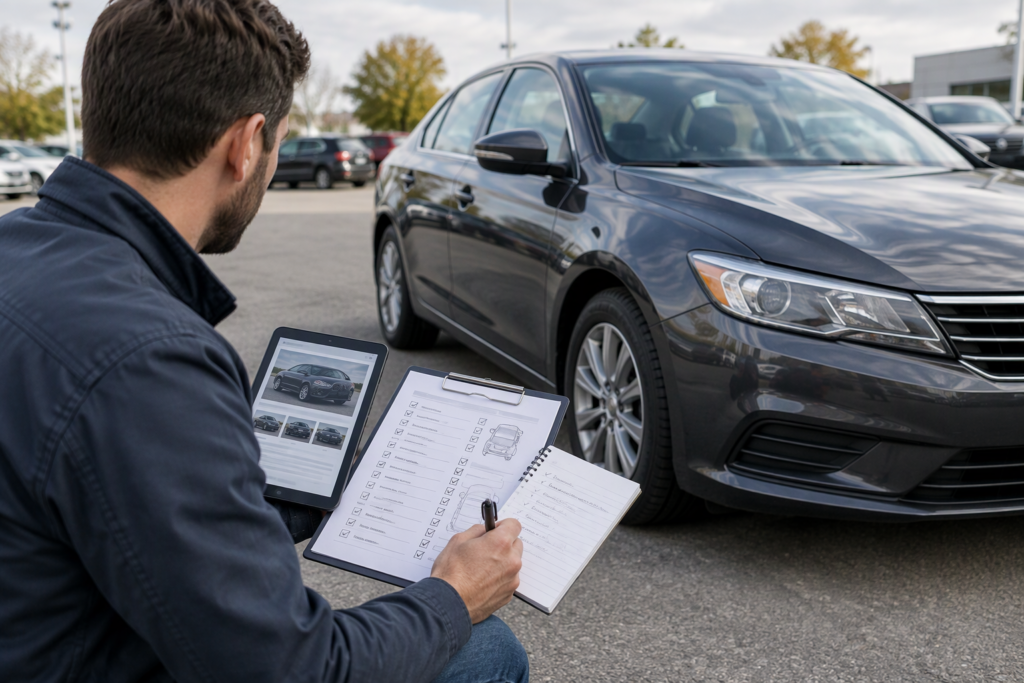
A used car history report can save you from buying somebody else’s expensive surprise. It may show title brands, recorded accidents, odometer entries, registration history, service records and other events linked to a vehicle identification number (VIN). It is useful evidence, but it is not a crystal ball. A clean report does not prove that a car is perfect, and a report with a warning does not automatically mean the car is a disaster.
The smart approach is to use the report as one part of your buying process, alongside a physical inspection, a test drive, paperwork checks and an independent mechanic’s opinion. Here is how to read the important sections without getting dazzled by a shiny “clean” badge.
1. Confirm the VIN matches the car
Start with the basics. Compare the VIN on the history report with the VIN shown on the vehicle itself and on the title or registration paperwork. The VIN may be visible at the lower windshield, inside the driver’s door area or in other locations depending on the vehicle.
If the numbers do not match, stop and resolve that before discussing price. A mismatch can be a simple paperwork error, but it can also point to a serious identity or title problem. Do not rely on a seller’s verbal explanation alone; ask the relevant motor-vehicle authority or a qualified professional how to verify it.
2. Read the title history carefully
Look for title brands such as salvage, rebuilt, flood, fire, hail or other designations used by the issuing state. The exact terms and rules vary by jurisdiction, so check the official title authority for your state when a brand appears.
A branded title is not automatically a no-go for every buyer, but it changes the risk, financing, insurance and resale questions. Ask what happened, how the repairs were completed and whether you can inspect supporting records. If the seller cannot explain the title clearly, walk away. There are plenty of cars in the sea, and some of them have fewer paperwork sharks.
3. Treat accident records as clues, not a complete repair file
Accident entries can show that damage was reported, but they may not describe every repaired component or every later problem. Minor-looking entries can involve important parts, while some collisions may never appear because they were handled privately or not reported to a participating data source.
Check the timing, reported severity and location of each event. Then look for evidence during an inspection: uneven panel gaps, paint overspray, mismatched colour, replaced lights, unusual tyre wear, steering pull, warning lights or signs of water intrusion. A qualified collision-repair professional can be helpful when the report points to significant damage.
4. Watch for odometer inconsistencies
Compare the mileage shown in the report with the current odometer, inspection records, service invoices and registration entries. A mileage reading that moves backward, jumps unexpectedly or conflicts with other paperwork deserves an explanation before you proceed.
Do not assume a low number is automatically better. Mileage is only one part of a vehicle’s condition. Time, storage, climate, maintenance and how the car was driven all matter. A higher-mileage vehicle with consistent records may be a safer purchase than a low-mileage car with unexplained gaps.
5. Look for gaps in the timeline
History reports are built from available records, not from every moment in a car’s life. A long period with no entries does not prove that nothing happened. It simply means the report has limited information for that period.
Use gaps to create questions:
- Where was the vehicle registered during the missing period?
- Was it serviced by a shop that did not report data?
- Was it owned privately, stored or used commercially?
- Can the seller provide maintenance invoices or inspection records?
Missing records are not automatic proof of wrongdoing, but they reduce certainty. Price the uncertainty honestly rather than paying as if the history were complete.
6. Check how the vehicle was used
Some reports identify prior use such as rental, lease, fleet, taxi or commercial service. That history can affect wear, but it does not tell the whole story. A former fleet vehicle may have received regular maintenance; a privately owned car may have been neglected.
Ask what the use means for the exact vehicle. Inspect the seats, pedals, steering wheel, cargo area, hitch, suspension and tyres for wear that matches the mileage and claimed use. A car that spent years carrying heavy loads deserves a closer look underneath.
7. Review service and maintenance entries
Service records are most useful when they are consistent and specific. Look for dates, mileage, the work performed and the servicing business. Routine entries can help establish a pattern, but a report may not include work completed by independent shops or by the owner.
Pay attention to repeated repairs, long maintenance gaps and work that appears overdue for the vehicle’s age or mileage. Use the manufacturer’s maintenance schedule for the exact model year and engine as a reference. Requirements vary, so avoid assuming that one service interval applies to every version of a model.
8. Check recalls separately
A history report may mention some recall-related events, but it should not replace an official recall lookup. Use the vehicle’s VIN with the appropriate government or manufacturer source, and ask whether open safety recalls have been completed.
Recall information can change, and the result depends on the exact VIN. If a safety recall is open, ask who will arrange the repair and get the answer in writing before buying. A recall notice is different from a general reliability complaint, so keep the two questions separate.
9. Compare the report with the seller’s story
Listen for contradictions. If the advert says “one careful owner” but the report shows several registration events, ask for clarification. If the seller says the car has never been damaged but the report lists a collision, request documentation. If the mileage in the advert differs from the report, pause the deal.
Honest sellers may have reasonable explanations for confusing records. The important point is whether the explanation is supported by paperwork and whether an independent inspection agrees. Pressure to skip questions is not evidence of a good deal.
What a vehicle history report cannot tell you
A report usually cannot confirm the current condition of the engine, transmission, brakes, tyres, suspension, air-conditioning system or electronics. It may not reveal every accident, flood exposure or mechanical fault. It also cannot tell you whether the asking price is fair for the vehicle’s actual condition and local market.
Before buying, arrange an independent pre-purchase inspection. Ask the mechanic to document urgent repairs, future maintenance and any safety concerns. If the seller refuses a reasonable inspection, treat that refusal as a major warning and keep shopping.
Use the report to improve your buying decision
Write down every question the report creates, then ask the seller to answer them before you negotiate. Verify the VIN, check official recall information, review the title paperwork and get an independent inspection. Finally, compare the complete out-the-door price with the vehicle’s condition—not just the monthly payment.
Before you make an offer, run the vehicle through the Bidding For Autos Deal Check to help assess the asking price. It is a decision aid, not a substitute for a title search, official recall lookup or qualified mechanic. That extra bit of homework is less glamorous than a test drive, but it can save you from buying a four-wheeled mystery novel.
Bottom line
A used car history report is best treated as a starting map. Confirm the VIN, inspect title and accident records, investigate mileage gaps, check recalls through an authoritative source and compare every claim with the physical car. When the report, paperwork, inspection and seller’s story all line up, you can negotiate with much more confidence. When they do not, the safest move is usually to keep looking.