You find a used car with a clean-looking interior, a tidy body and a price that seems almost too reasonable. The seller says it has been dependable for years. You take it for a short drive, hear nothing alarming and start imagining it on your driveway. Three weeks later, a warning light appears, the service history still has holes and your “bargain” is asking for more money than your patience can comfortably provide.
That does not mean every used car is a mechanical trap. It means reliability needs evidence. A model name, a confident salesperson or a random internet ranking cannot tell you everything about one specific vehicle.
Here is a practical way to judge used-car reliability without relying on a vague list or trusting a car simply because it starts on the day you view it.
Start with the exact vehicle, not just the model
Research the exact year, engine, transmission and trim you are considering. A model name can cover several mechanical versions, and changes between model years can matter.
Record the vehicle identification number, mileage and service history. Confirm that the VIN on the vehicle matches the paperwork and history reports. If a seller will not provide enough information for a proper check, treat that as a reason to slow down.
Start with the Bidding For Autos buying resources, and use the used-car price negotiation guide when you need to connect condition and risk to the asking price.
Read the service history for patterns
Maintenance records are not glamorous, but they are some of the best evidence available. Look for regular servicing that matches the manufacturer’s schedule and mileage. Depending on the vehicle, that may include oil and filter changes, brake work, tyre replacement, coolant service, transmission maintenance and other scheduled items.
One missing receipt does not automatically make a vehicle unreliable. What matters is the overall pattern. A car with years of documented care is easier to assess than one with a blank history and a seller saying, “It was always serviced.”
Look closely at gaps in the mileage record, repeated repairs, warning lights and signs that the car spent its life in demanding use such as towing, delivery work, short urban trips or rental service.
Check known problems carefully
Search for technical service information, owner reports and manufacturer announcements for the exact year and engine. Treat internet forums as leads, not proof. A dramatic story from one owner does not establish how common a problem is, and a quiet forum does not prove that a vehicle is trouble-free.
For safety recalls, use an official recall lookup and confirm whether open work applies to the specific VIN. Do not invent a recall conclusion from a general article about the model. Recall status is vehicle-specific and can change as manufacturers issue new notices.
Inspect the expensive systems
A test drive is useful, but it is not a mechanical inspection. Pay attention to how the vehicle starts cold, idles, accelerates, shifts, brakes and handles. Listen for unusual noises and check whether warning lights appear when the ignition is switched on and then disappear after starting.
Check the condition of the tyres, brakes, suspension, air conditioning, lights, windows and safety equipment. Look for fluid leaks, uneven tyre wear, mismatched body panels and signs of water damage.
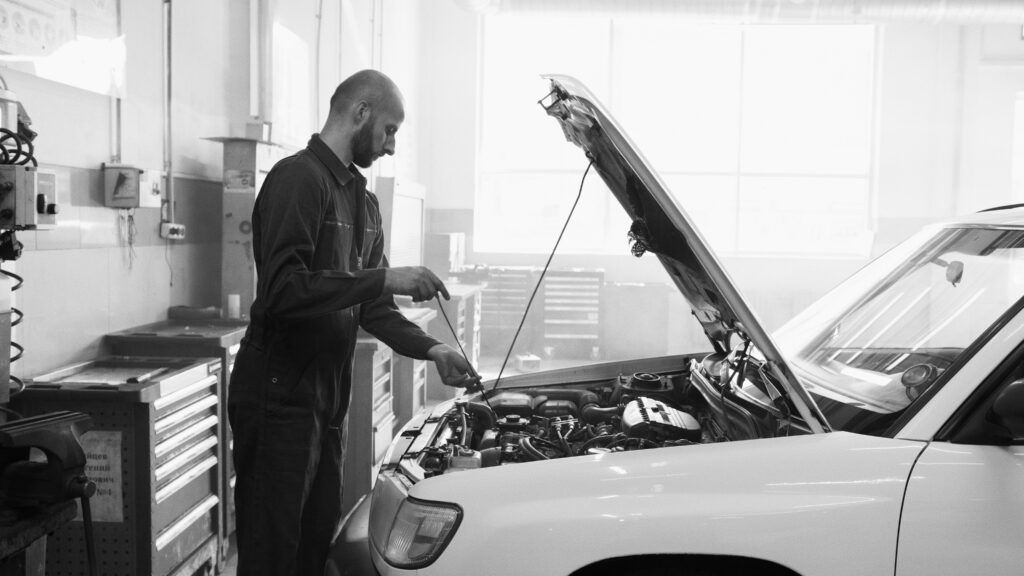
Some faults are hidden until the vehicle is lifted or scanned. Arrange an independent inspection before purchase. The mechanic should explain which findings are urgent, which are normal wear and what may need attention soon.
Do not confuse low mileage with low risk
Low mileage is helpful information, not a reliability guarantee. A low-mileage vehicle can still have age-related rubber, battery, tyre, seal or electronic problems. It may also have spent years doing short trips, which can be harder on some systems than regular longer journeys.
High mileage is not an automatic rejection either. A higher-mileage car with consistent maintenance, good inspection results and a realistic price may be a better purchase than a lower-mileage example with missing records.
Think in terms of condition and evidence, not a single number.
Estimate ownership risk honestly
Before buying, list the work that may be due soon. Include tyres, brakes, scheduled servicing, cosmetic repairs and any warning signs from the inspection. Then decide whether the price leaves enough room for those costs.
Do not use an invented reliability score or a generic repair figure as if it were a quote. Repair costs vary by location, parts, labour rates and vehicle configuration. Ask a qualified shop for an estimate when a finding matters to the purchase decision.
Questions to ask the seller
- How long have you owned the vehicle?
- Why are you selling it?
- Do you have service records?
- Has it had accident, flood or title-brand history?
- Was it used for towing, delivery, rental or commercial work?
- Are there warning lights or known faults?
- Will you allow an independent inspection?
Listen for consistency between the answers, the paperwork and the vehicle itself. A smooth story is not evidence by itself, but contradictions deserve attention.
Use a simple reliability decision
Give the vehicle a green, yellow or red decision based on evidence:
- Green: records are consistent, inspection findings are manageable, safety information is checked and the price leaves room for ownership costs.
- Yellow: some records or answers are incomplete, but the seller allows proper checks and the price reflects the uncertainty.
- Red: the seller refuses inspection, the paperwork conflicts with the vehicle, safety questions are unresolved or the price only works if you ignore obvious risks.
Check the asking price as well as the car
A reliable vehicle can still be an overpriced purchase. Before you commit, use the free Bidding For Autos Deal Check to evaluate the asking price alongside the condition and history you have found. If you want the more detailed paid review, the Deal Check report costs $9.99.
That does not replace an independent inspection or an official safety check. It gives you a clearer price question to take into the conversation: does this asking price make sense for this vehicle, in this condition, with these risks?
Final takeaway
The most reliable used car is not always the one at the top of a list. It is the one with a suitable history, sensible maintenance evidence, a clean inspection, checked safety information and a price that reflects its condition.
Take your time, verify the details and be willing to walk away. In used-car buying, a little patience is often cheaper than a very enthusiastic mistake.