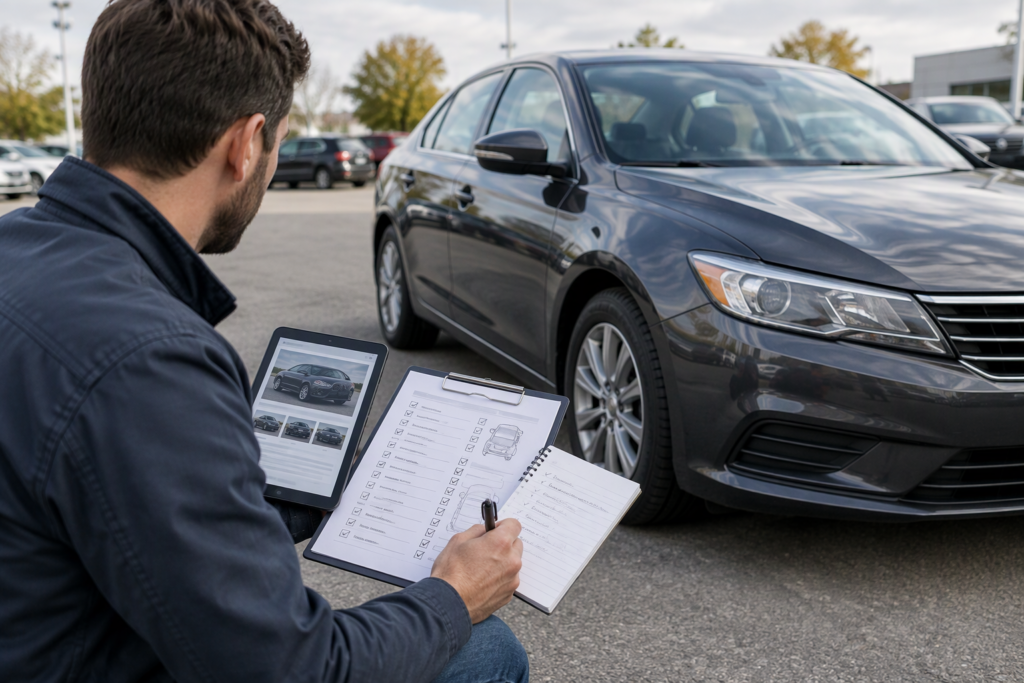
Can you tell whether a used-car listing is worth pursuing before you visit? Yes—treat the listing as a set of claims to verify, not proof that the car is a good deal. Confirm the vehicle identity, total price, history, condition, fees and inspection access before spending time or money.
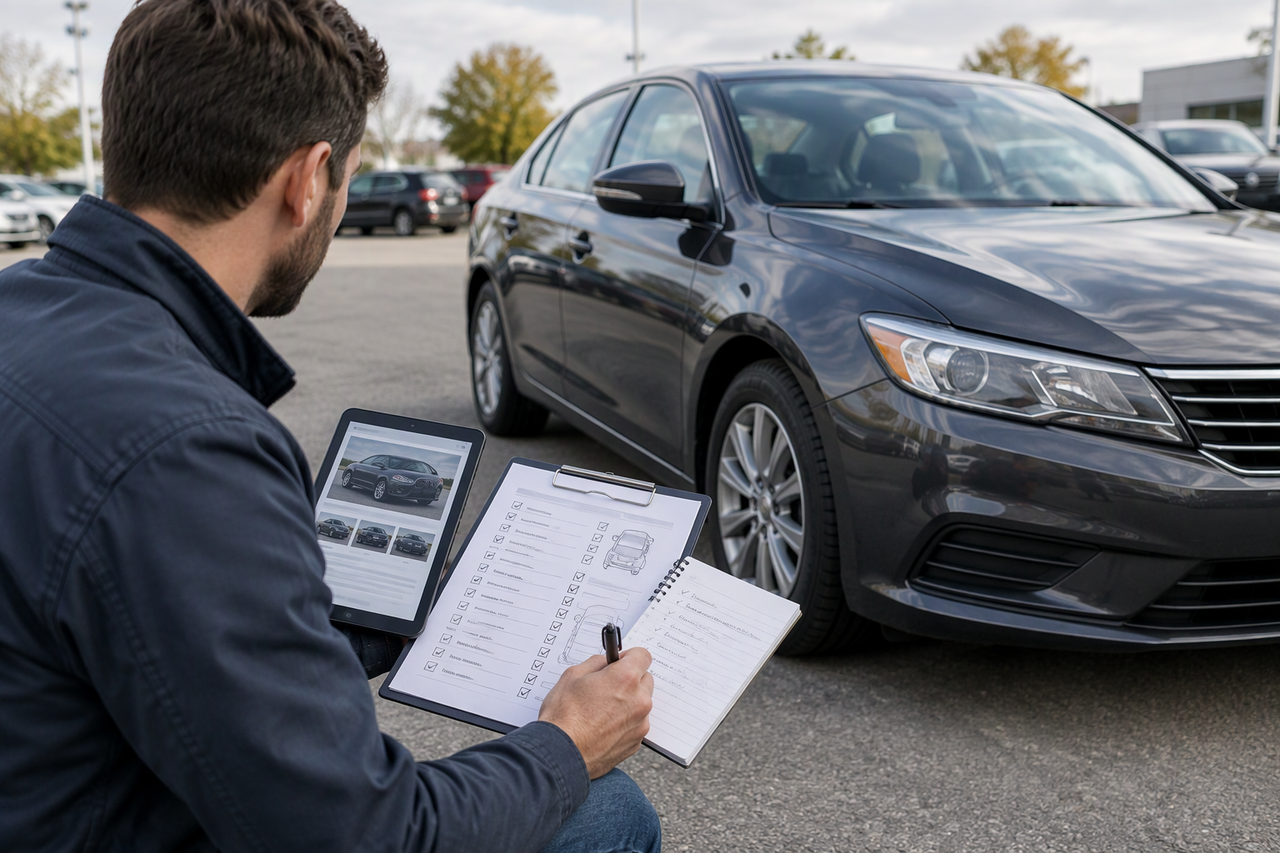
Friday listing note: Live listing data was unavailable for this draft, so no current vehicle, price or listing URL is presented as fact.
1. Capture the listing details
Save the stock number, VIN, seller name, location, asking price, mileage, model year, trim, drivetrain and the date you checked it. Screenshots can help preserve what was advertised if the price or equipment changes later.
Also record what the listing does not say: accident history, number of owners, title status, warranty coverage, dealer fees, reconditioning charges and whether the advertised price requires financing, a trade-in or a rebate.
2. Match the VIN, trim and equipment
Ask the seller to confirm that the VIN on the listing matches the vehicle and the paperwork. Compare the advertised trim with the VIN-based equipment record and the photos. A higher trim name does not automatically prove that every package or option is present.
Check practical details that affect value: engine, transmission, drivetrain, seating configuration, towing equipment, safety features, tire condition and keys. If an important feature appears in the headline but not in the written equipment list, treat it as unverified.
3. Separate price from the real purchase total
Ask for a written out-the-door estimate before visiting. It should identify the vehicle price, taxes, title and registration, documentation or processing fee, dealer-installed products, financing conditions and any required add-ons. A low online price can be incomplete if required charges appear later.
For a useful script, see what to say when a dealer will not give you an out-the-door price.
Want a quick price check before you call the seller?
4. Use comparison evidence carefully
Compare the listing with several similar vehicles using the same model generation, year range, trim, drivetrain, mileage band and broad condition. Record the asking prices and locations, but do not treat asking prices as completed-sale prices. Differences in history, equipment, warranty and fees can explain part of the gap.
When a listing is unusually cheap, investigate before celebrating. Possible explanations include higher mileage, salvage or rebuilt title history, missing equipment, deferred maintenance, undisclosed fees or a price that depends on financing.
5. Ask inspection questions before you travel
- May I see the VIN and a vehicle-history report?
- Is the title clean and available for inspection?
- Has the vehicle been in a collision, flood or rental fleet?
- What warning lights are currently illuminated?
- What maintenance and repair records are available?
- How old are the tires, and are all four the same type?
- May I arrange an independent pre-purchase inspection?
- Can I test-drive the vehicle from a cold start?
- Which fees and add-ons are mandatory?
6. Illustrative listing review
The figures below are hypothetical and illustrative only. Imagine a listing for a 2020 compact SUV with 62,000 miles and an asking price of $18,900. The seller then quotes a $799 documentation fee, $1,200 protection package and an estimated $1,700 for tax, title and registration.
| Item | Illustrative amount |
|---|---|
| Advertised vehicle price | $18,900 |
| Documentation fee | $799 |
| Protection package | $1,200 |
| Estimated tax, title and registration | $1,700 |
| Illustrative total before financing interest | $22,599 |
The $22,599 total is not a market valuation; it simply shows why the advertised price and the purchase total must be compared separately. Ask which products are optional and request a revised written total if you decline them.
7. Set walk-away conditions
Walk away when the seller will not provide the VIN, refuses an independent inspection, changes the price after you arrive, cannot explain the title status, hides mandatory fees, or pressures you to decide before reviewing the paperwork. A mechanical concern that cannot be evaluated independently is also a reason to stop rather than guess.
For another perspective on warning signs, read how dealer experience can reveal used-car risks.
8. Check the deal after the facts are verified
Have the VIN, price, mileage, and fee details ready?
Use the result as one input alongside condition, history, inspection findings and the complete out-the-door total—not as a substitute for an inspection.
Bottom line
A used-car listing is worth pursuing when its identity, condition, price and fees can be independently checked. If the seller will not provide the basic facts or allow a fair inspection, the safest decision is to keep searching.
Ready for the full price and value review?