
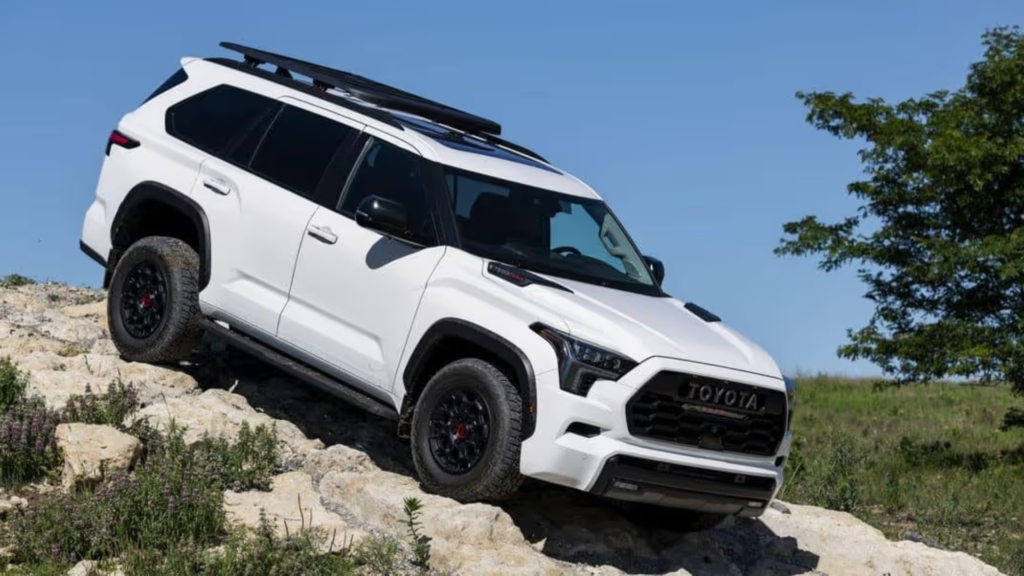
Used SUVs under $15000 might seem like great deals at first, but many of them are sitting right at the stage where expensive failures begin—turning a cheap purchase into a costly mistake. With prices still elevated and hidden issues like transmission problems, turbo failures, and electrical faults becoming more common, buyers often end up paying thousands more than expected. The key isn’t just finding a low price—it’s choosing an SUV with a proven engine, simple drivetrain, and a track record of long-term reliability that actually makes financial sense.
Why Most Used SUVs Under $15000 Become Expensive to Own
Rising Prices in the Used SUVs Under $15000 Market
The used car market hasn’t fully corrected since 2020, and prices for SUVs under $15000 are still significantly inflated compared to previous years. What used to be a reliable, low-risk $10K vehicle is now often a higher-mileage SUV with more wear and tear. This shift means buyers are paying more upfront for vehicles that are closer to major failure points—reducing the margin of safety that budget buyers used to have.
Shopping on a tight budget? Reliability matters more than a low sticker price. See our 12 Most Reliable Cars in 2026 for more proven long-term choices.
Hidden Repairs That Turn Cheap SUVs Into Costly Mistakes
Many SUVs in this price range are affordable for a reason—they’re approaching the stage where expensive components begin to fail. Transmissions, turbochargers, suspension systems, and electrical modules can all require major repairs between 80,000 and 120,000 miles. These issues don’t always show up during a test drive, but when they do, repair costs can quickly reach $2,000 to $5,000 or more, turning a “cheap” SUV into a financial burden.
Used SUVs to Avoid High Repair Costs
Not all used SUVs are equal, and avoiding high repair costs comes down to identifying the wrong types of vehicles. Models with complex turbocharged engines, unreliable CVT transmissions, or known manufacturing defects tend to have higher long-term ownership costs. In contrast, SUVs with naturally aspirated engines, traditional automatic transmissions, and proven reliability records are far less likely to surprise you with major expenses.
What Makes the Best Used SUVs Under $15000 Worth Buying
Proven Engines vs Modern Turbocharged Failures
One of the biggest differences between a smart buy and a financial mistake comes down to the engine. The best used SUVs under $15000 typically rely on naturally aspirated engines that have been tested over years in real-world conditions. These engines are simpler, run cooler, and have fewer failure points compared to modern turbocharged setups. Turbo engines may offer better performance and fuel efficiency on paper, but they introduce added stress, heat, and complexity—making them more prone to expensive failures as mileage increases.
Simple Drivetrains in Reliable SUVs Under $15k
Reliable SUVs under $15k often share one key trait: simplicity. Traditional automatic transmissions, basic AWD systems, and minimal electronic interference make these vehicles easier and cheaper to maintain. In contrast, complex drivetrains—especially CVTs and electronically controlled systems—can become major liabilities over time. When something goes wrong, repairs are not only more expensive but also harder to diagnose, increasing both downtime and cost.
Cheap Used SUVs Under $15000 with Low Maintenance Cost vs Feature-Heavy Cars
Many buyers are drawn to feature-packed SUVs with leather seats, panoramic roofs, and advanced tech—but these extras often come at the cost of long-term reliability. Cheap SUVs with low maintenance cost usually skip unnecessary complexity and focus on durability instead. Fewer electronics, simpler interiors, and proven components reduce the chances of failure. In the long run, a basic, well-built SUV will almost always cost less to own than a fully loaded vehicle packed with aging features.
12 Used SUVs Under $15,000 Ranked (Worst to Best)
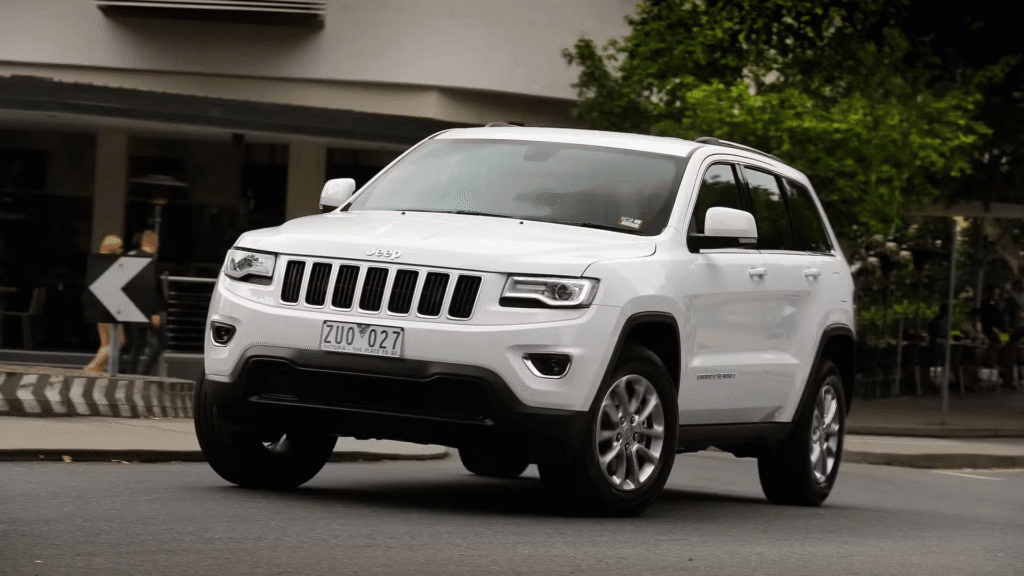
12 – Jeep Grand Cherokee (2011–2013)
The Jeep Grand Cherokee (2011–2013) offers an affordable entry into the midsize SUV segment with a surprisingly premium feel for the price. Built on the WK2 platform with some Mercedes-era engineering, it delivers a comfortable ride, solid road presence, and a refined interior that makes it stand out in this budget range. Most models come equipped with the 3.6L Pentastar V6, producing around 290 horsepower, which performs well when properly maintained and provides a balanced driving experience.
However, ownership can become unpredictable over time. Electrical issues are one of the most common problems, particularly with the TIPM (Totally Integrated Power Module), which can lead to no-start conditions and random system failures. Models equipped with air suspension add another layer of risk, as these systems often fail between 80,000 and 120,000 miles. The 5-speed automatic transmission is generally average but tends to develop rough shifting as mileage increases.
Repair costs can escalate quickly if these issues appear. Replacing the TIPM typically costs between $800 and $1,500, while air suspension repairs can range from $2,000 to $3,000. Transmission-related problems can add further expense if not addressed early. Overall, while the Grand Cherokee offers strong value on paper with its comfort and features, the combination of electrical and mechanical risks makes it a less reliable long-term choice in this price range.
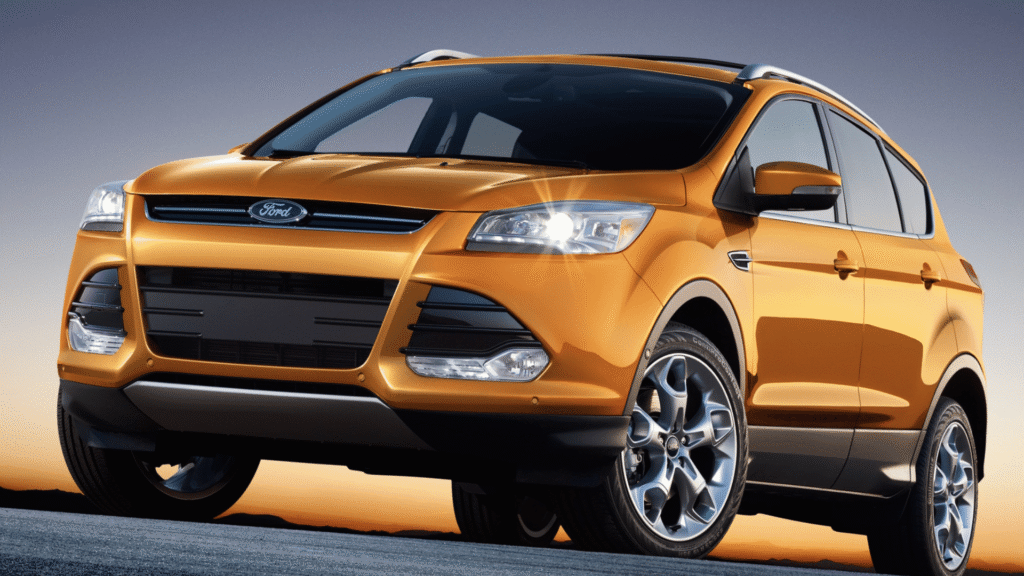
11 – Ford Escape (2013–2016)
The Ford Escape (2013–2016) is one of the most common compact SUVs in this price range, offering easy availability, affordable parts, and a practical design that appeals to everyday buyers. Built on Ford’s C-platform, it drives more like a car than a traditional SUV, making it comfortable and easy to handle. Engine options play a critical role here. The base 2.5L naturally aspirated engine is relatively simple and dependable, making it the safer choice for long-term ownership.
However, most models on the market come equipped with EcoBoost turbocharged engines—specifically the 1.6L and 2.0L variants—which introduce significant reliability concerns. The 1.6L EcoBoost is particularly known for coolant intrusion issues, which can lead to overheating and, in severe cases, complete engine failure. This is where ownership risk increases dramatically, especially as mileage climbs. On top of that, the 6-speed automatic transmission performs well early on but tends to develop rough shifting and wear-related issues after 100,000 miles.
Repair costs can quickly turn this SUV into an expensive mistake. Engine replacement due to EcoBoost failure can range from $3,000 to $6,000, while transmission repairs add further financial pressure over time. Overall, the Ford Escape is practical, efficient, and easy to live with—but only if you stick to the base engine. Turbocharged models, while appealing on paper, carry higher long-term risk and make this a less reliable option in the used SUV market.
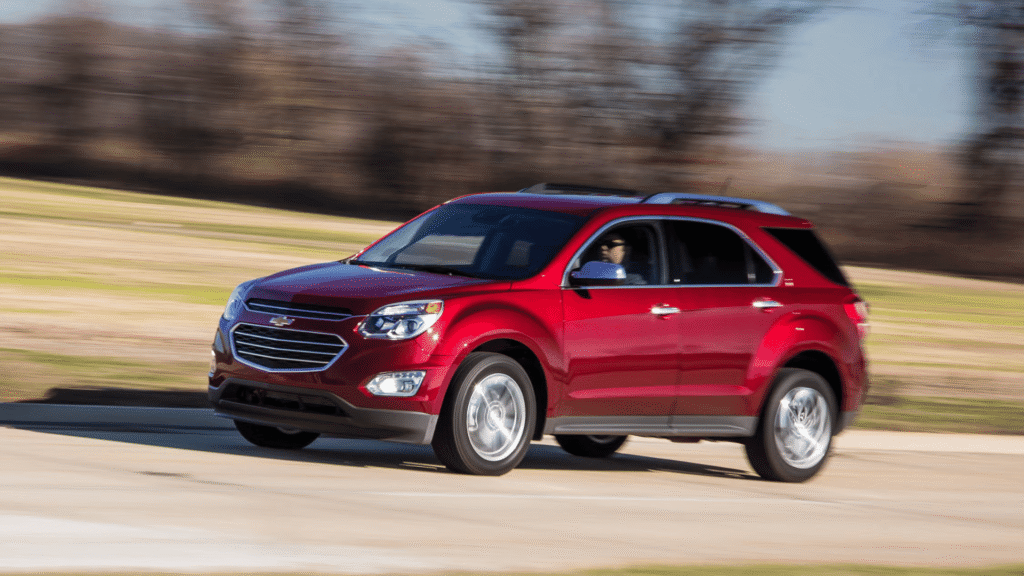
10 – Chevrolet Equinox (2013–2017)
The Chevrolet Equinox (2013–2017) is one of the most affordable SUVs you’ll find in this price range, often available well under $10,000 with wide market availability. Built on GM’s Theta platform, it focuses heavily on comfort, offering a soft ride, quiet cabin, and a smooth daily driving experience that makes it appealing for budget-conscious buyers. Most models come equipped with a 2.4L inline-4 engine producing around 182 horsepower, delivering decent fuel economy in the range of 22–32 MPG.
However, this is where the biggest problem begins. The 2.4L engine is widely known for excessive oil consumption, with some units burning up to one quart every 1,000 miles. This issue often goes unnoticed by owners until it leads to serious engine damage, including timing chain failure. As mileage increases, the risk becomes more significant, especially if oil levels are not consistently monitored.
Repair costs can quickly escalate if these problems occur. Fixing timing chain damage can cost between $1,500 and $2,500, while a full engine replacement can exceed $4,000. Although a V6 option was available, it is less common and generally comes with higher maintenance costs. Overall, while the Equinox looks like a great deal due to its low price and comfort, its engine reliability issues make it one of the weaker long-term choices in this segment.
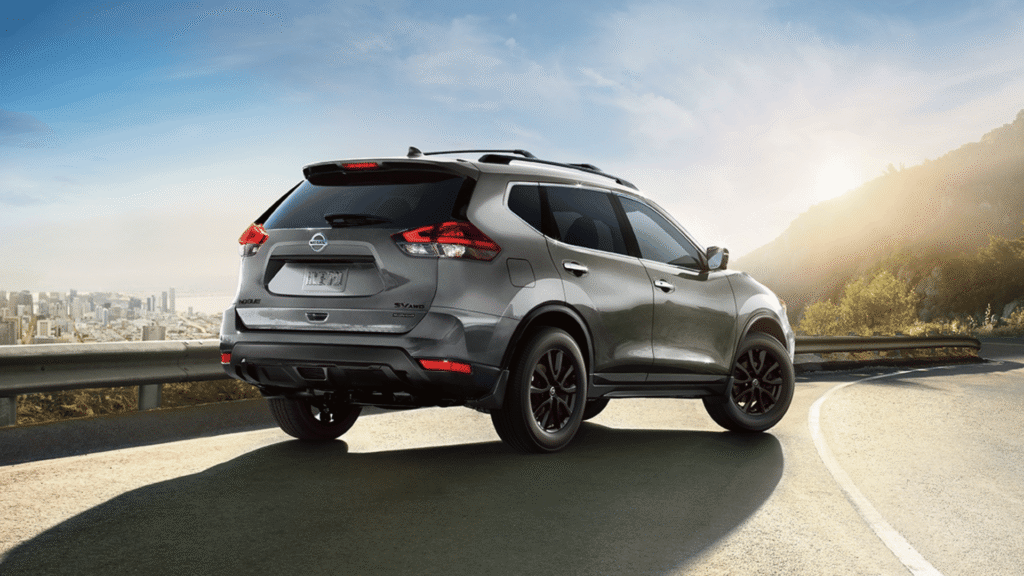
9 – Nissan Rogue (2014–2018)
The Nissan Rogue (2014–2018) is one of the best-selling compact SUVs in this price range, offering strong practicality, good fuel economy, and easy availability in the used market. Built on Nissan’s CMF platform, it focuses on comfort and space, with generous rear seating and up to 70 cubic feet of cargo capacity. Under the hood, it uses a 2.5L naturally aspirated engine that is generally simple and reliable, making it appealing for everyday use.
However, the biggest concern with the Rogue is its transmission. It uses Nissan’s Xtronic CVT, which has a well-documented history of long-term reliability issues. Common problems include delayed acceleration, shuddering, overheating, and eventual failure—often appearing between 80,000 and 120,000 miles. Unlike traditional automatic transmissions, CVTs are more complex and expensive to repair, making them a major risk factor in long-term ownership.
When the transmission fails, replacement costs typically range from $3,500 to $5,000, which can easily exceed the value advantage of buying this SUV in the first place. While the Rogue makes sense in terms of comfort, space, and efficiency, the CVT becomes a single point of failure that significantly impacts overall ownership cost. As a result, it’s a practical SUV on the surface—but carries enough risk to keep it lower in the rankings.
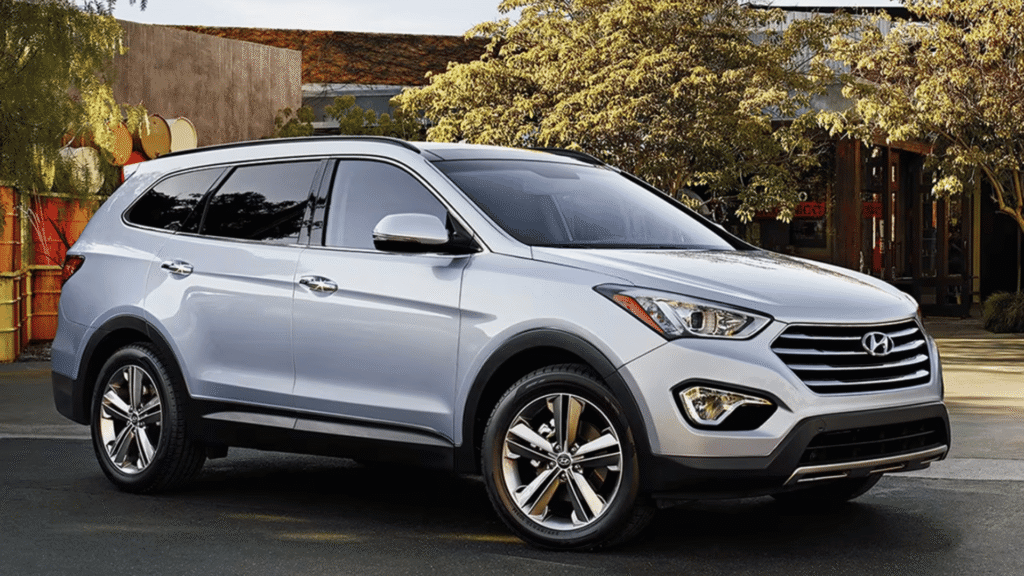
8 – Hyundai Santa Fe (2013–2016)
The Hyundai Santa Fe (2013–2016) stands out as one of the best value-packed SUVs under $15,000, offering a strong feature set that includes leather interiors, panoramic sunroof, push-button start, and even third-row seating on some trims. It delivers a comfortable ride, solid interior quality for the price, and decent fuel economy in the range of 20–27 MPG. Under the hood, most models come equipped with a 2.4L Theta II engine producing around 190 horsepower, while a more reliable 3.3L V6 is available but less common.
Despite its strong value on the surface, the biggest concern lies in the engine. The 2.4L Theta II engine has a known history of manufacturing defects that can lead to knocking, sudden power loss, and in severe cases, complete engine failure. These issues often appear without much warning and become more common as mileage increases, making long-term ownership unpredictable.
Repair costs can be significant if the engine fails, with replacements typically ranging from $4,000 to $7,000. While recalls were issued for some units, many vehicles in the used market are now out of warranty coverage, leaving owners to bear the full cost. Overall, the Santa Fe offers excellent features and comfort for the money, but the engine-related risks make it a less reliable choice compared to more proven options in this segment.
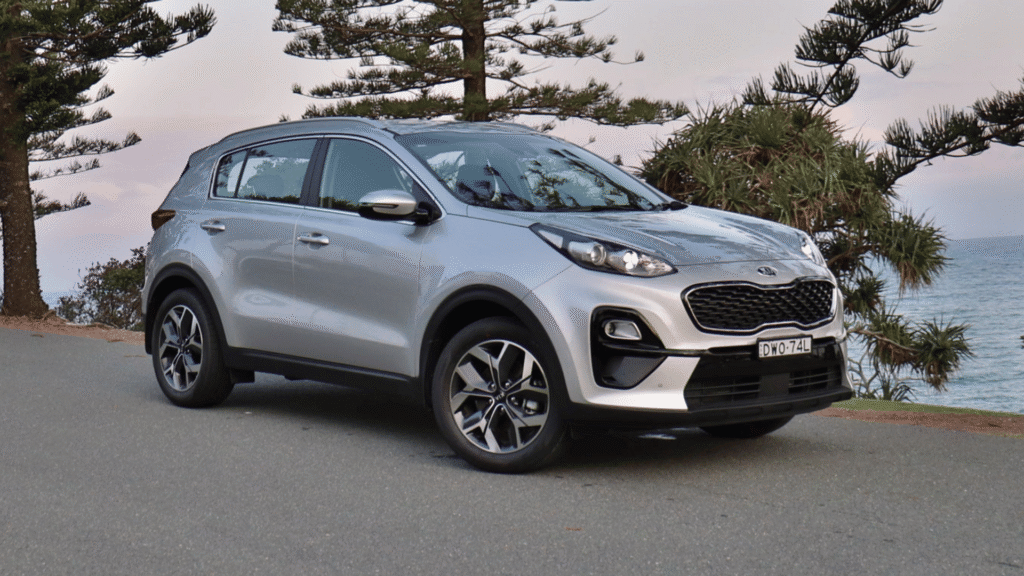
7 – Kia Sportage (2014–2018)
The Kia Sportage (2014–2018) is one of the most appealing SUVs in this price range at first glance, thanks to its modern styling, strong feature list, and a more premium feel than many of its competitors. Even under $15,000, you can find well-equipped trims with features like a touchscreen infotainment system, backup camera, heated seats, and panoramic sunroof on higher variants. It’s practical enough for daily use, offering around 26 cubic feet of cargo space, expanding to over 50 with the rear seats folded.
However, the biggest concern lies under the hood. Most models come equipped with a 2.4L inline-4 engine, which is part of the Theta II engine family—known for serious reliability issues. These include bearing failure, excessive oil consumption, and in some cases, complete engine seizure. There is also a 2.0L turbo option that delivers better performance, but it adds more complexity and increases long-term risk.
As mileage climbs past 90,000 to 140,000 miles, the chances of engine-related issues increase significantly. Engine replacement costs typically range between $4,000 and $7,000, which can easily outweigh the initial savings. While the Sportage offers great value in terms of features and design, its long-term reliability concerns make it a risky choice compared to more mechanically proven SUVs in this segment.
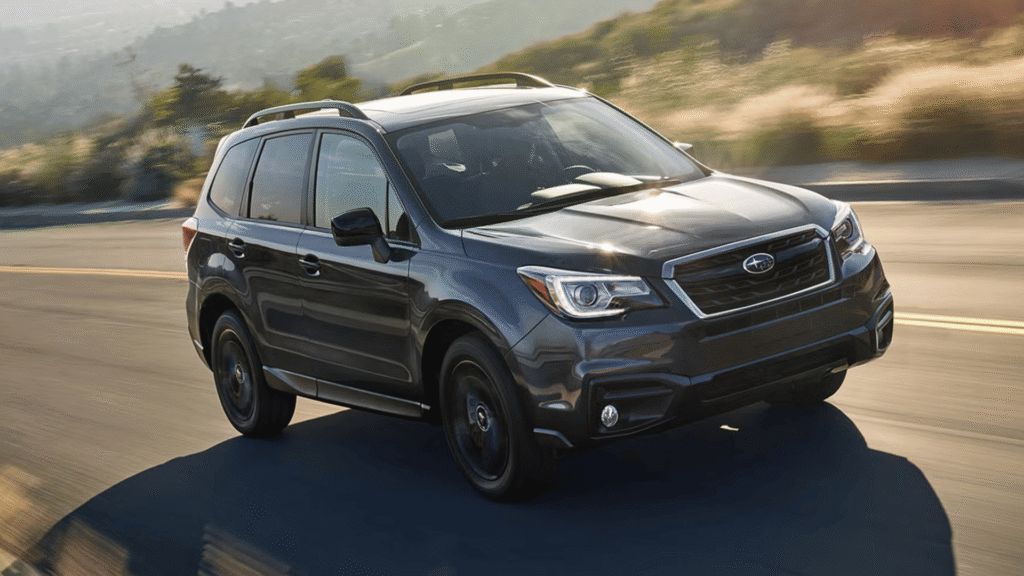
6 – Subaru Forester (2014–2018)
The Subaru Forester (2014–2018) stands out in this segment for one major reason—standard all-wheel drive across every trim. Subaru’s symmetrical AWD system is one of the most balanced and capable setups available, making it an excellent choice for rain, snow, and rough road conditions. It’s also highly practical, offering around 34 cubic feet of cargo space, expanding to over 74 with the rear seats folded, along with 8.7 inches of ground clearance. Under the hood, it uses a 2.5L Boxer engine producing around 170 horsepower, delivering solid fuel economy in the range of 24–32 MPG.
However, this is not a “buy and forget” SUV—it’s maintenance-sensitive. The biggest issue revolves around the CVT transmission. While Subaru labels the fluid as “lifetime,” real-world ownership tells a different story. The CVT requires fluid changes every 30,000 to 40,000 miles to maintain reliability. Ignoring this can lead to early wear, shuddering, and eventual failure as mileage increases.
If the transmission fails, replacement costs typically range between $4,000 and $6,000. Earlier models in this generation also experienced some oil consumption issues, although these were mostly improved after 2015. Overall, the Forester is a highly capable and practical SUV with strong safety and usability advantages—but only if it’s properly maintained. Without that, it can quickly become an expensive ownership experience.
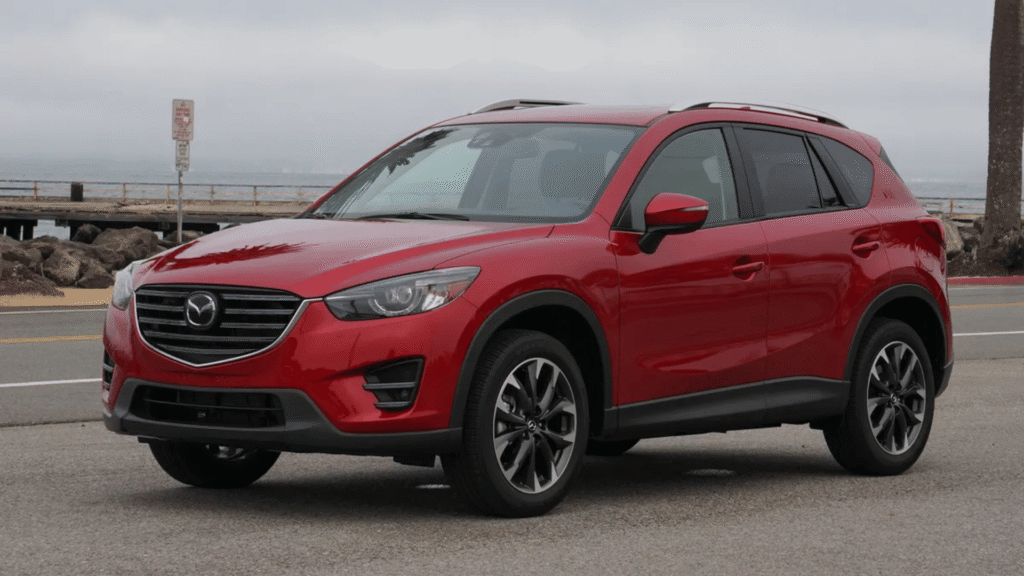
5 – Mazda CX-5 (2013–2016)
The Mazda CX-5 (2013–2016) is where this list starts shifting into genuinely well-engineered SUVs that balance performance, efficiency, and long-term reliability. Built around Mazda’s Skyactiv philosophy, it focuses on lightweight construction, high-compression naturally aspirated engines, and reduced mechanical complexity. This approach not only improves fuel efficiency but also reduces long-term failure points compared to more complex turbocharged competitors.
On the road, the CX-5 feels noticeably sharper than most SUVs in this price range. Steering is more responsive, body roll is controlled, and overall driving dynamics are more engaging. It doesn’t just function as a practical SUV—it actually feels refined and well-tuned. Under the hood, the 2.5L naturally aspirated engine (around 184 horsepower) is the preferred option, offering a strong balance of power and durability. Importantly, it avoids turbocharging and uses a traditional 6-speed automatic transmission instead of a CVT, which significantly improves long-term reliability.
In terms of ownership, the CX-5 is one of the more dependable choices here. Build quality is solid, major mechanical failures are relatively rare, and maintenance costs remain reasonable over time. While early models may have some road noise and basic infotainment systems, these are minor drawbacks that don’t impact reliability. Overall, the CX-5 stands out as a well-rounded SUV that delivers both driving satisfaction and long-term peace of mind.
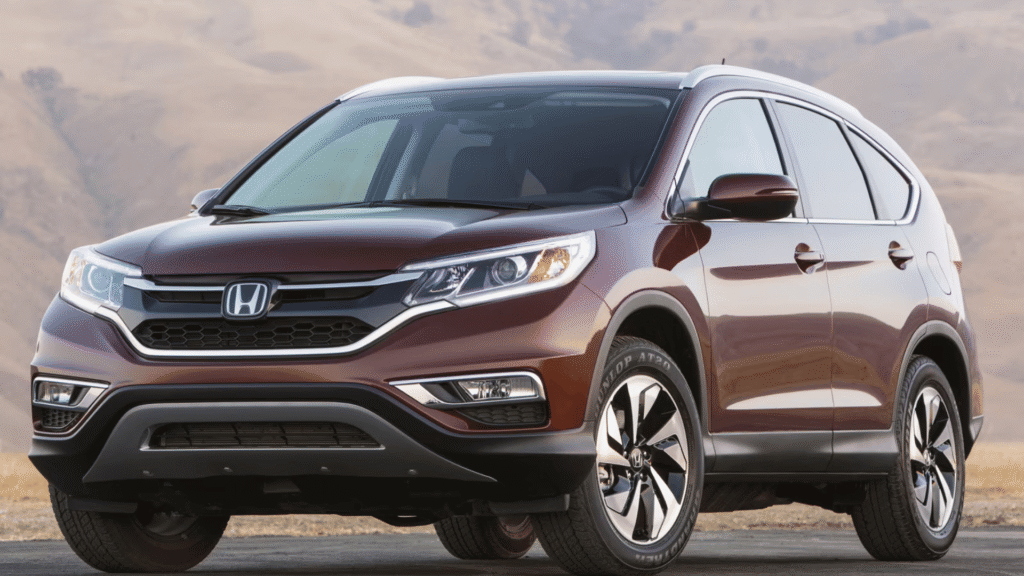
4 – Honda CR-V (2012–2016)
The Honda CR-V (2012–2016) is one of the most proven and dependable compact SUVs in this price range, built around simplicity and long-term reliability. Under the hood, it uses the 2.4L K24 engine, producing around 185 horsepower—an engine known for consistently crossing 200,000 miles with basic maintenance. Earlier models come with a traditional 5-speed automatic transmission, which is simple and durable, while 2015+ models switched to a CVT that is generally reliable but slightly less robust over the long term.
Where the CR-V really stands out is practicality. It offers up to 70 cubic feet of cargo space, spacious rear seating, and an overall design that makes it one of the easiest SUVs to live with on a daily basis. Fuel economy is also strong, averaging around 23–31 MPG, making it a cost-effective option for long-term ownership.
There are a few known issues to be aware of. AC compressor failures are relatively common and can cost between $800 and $1,500 to repair. Higher mileage CVT models may also show minor hesitation, though not typically severe. Overall, the CR-V delivers a strong balance of reliability, usability, and low ownership cost, making it one of the safest and most sensible choices in the used SUV market.
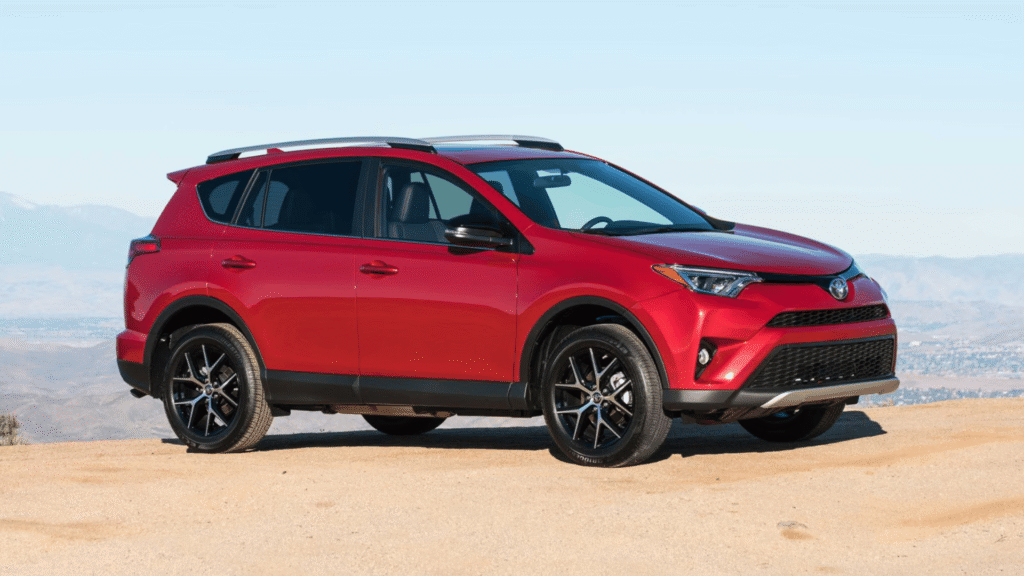
3 – Toyota RAV4 (2013–2018)
The Toyota RAV4 (2013–2018) is one of the most proven and reliable compact SUVs ever built, making it a top choice for buyers focused on long-term ownership. Under the hood, it uses a 2.5L naturally aspirated engine producing around 176 horsepower—simple, durable, and designed to last. Unlike many competitors, it avoids turbocharging and complex systems, which significantly reduces the chances of major failures over time.
Simplicity is where the RAV4 truly stands out. It uses a traditional 6-speed automatic transmission instead of a CVT, making it more predictable and easier to maintain in the long run. There are fewer electronic complications, fewer high-risk components, and an overall design that prioritizes durability over features. This is exactly why many of these SUVs regularly cross 200,000 miles with only basic maintenance.
Ownership costs remain low compared to most rivals in this segment. Parts are widely available, repairs are generally affordable, and resale value stays strong even after years of use. While the interior may feel basic and less refined than some competitors, that simplicity is a major reason behind its long-term reliability. Overall, the RAV4 isn’t the most exciting SUV—but it’s one of the smartest financial decisions you can make in this price range.
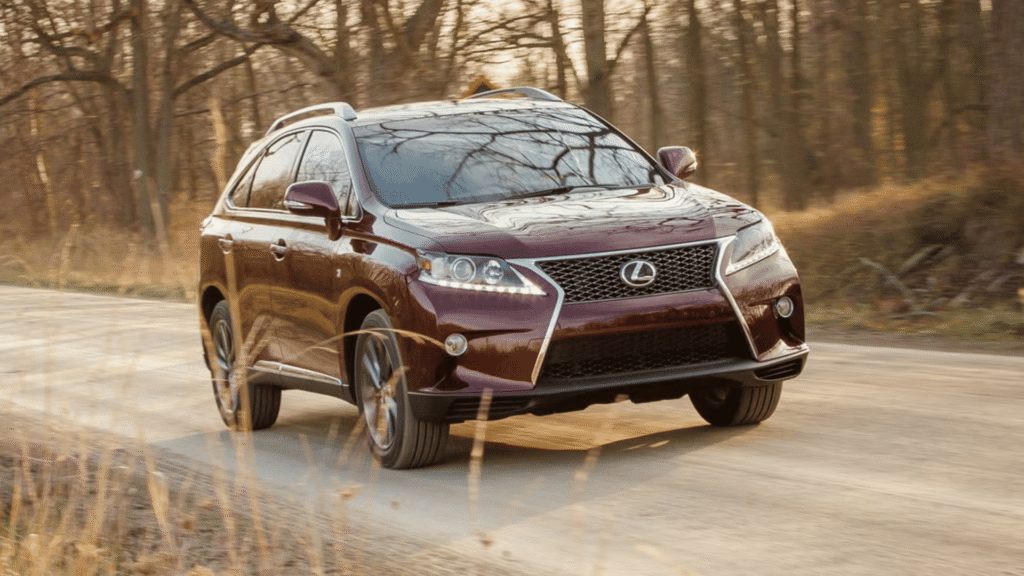
2 – Lexus RX 350 (2009–2013)
The Lexus RX 350 (2009–2013) offers something rare in this price range—a true luxury SUV experience without the typical luxury ownership risks. Originally priced around $40,000 to $45,000, it now competes with basic crossovers under $15,000, making it one of the best value upgrades in the used market. The interior is quiet, comfortable, and built with higher-quality materials, while the ride quality is smooth and refined, clearly standing above most non-luxury rivals.
The real strength of the RX 350 lies under the hood. It uses the 3.5L V6 (2GR-FE), producing around 275 horsepower—one of the most proven and reliable engines Toyota has ever built. Naturally aspirated and chain-driven, this engine is known to regularly exceed 200,000 to 300,000 miles with proper maintenance. It’s paired with a 6-speed automatic transmission that is smooth, durable, and well-matched for long-term use.
In terms of ownership, the RX 350 delivers strong long-term value. While fuel economy is slightly lower (around 18–24 MPG) and the technology feels dated by modern standards, these are minor trade-offs compared to its reliability. Maintenance costs are reasonable for a luxury vehicle, and major mechanical failures are rare. Overall, the RX 350 stands out as a smart buy—offering premium comfort, proven engineering, and low long-term risk in a segment where most luxury SUVs become financial traps.
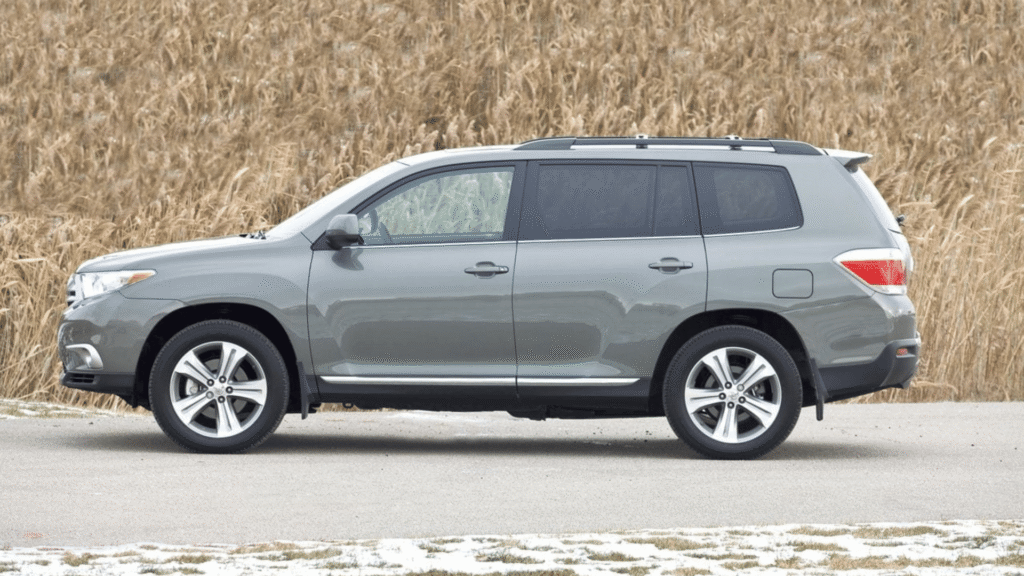
1 – Toyota Highlander (2008–2013)
The Toyota Highlander (2008–2013) stands at the top of this list because it delivers the best overall balance of reliability, practicality, and long-term ownership value. Built on Toyota’s K platform, shared with the Camry, it benefits from a simple and well-proven foundation that prioritizes durability over complexity. It’s a true family SUV, offering three-row seating for up to seven passengers and over 80 cubic feet of cargo space, making it both practical and versatile for everyday use.
Under the hood, it features the 3.5L V6 (2GR-FE), producing around 270 horsepower—one of the most reliable engines in this segment. Naturally aspirated and chain-driven, it is known to consistently exceed 200,000 miles with minimal issues when properly maintained. It’s paired with a 5-speed or 6-speed automatic transmission, both of which are durable and predictable over the long term. There’s also a hybrid option available, delivering better fuel economy without sacrificing reliability.
Ownership is where the Highlander truly stands out. Maintenance costs are low, parts are widely available, and resale value remains strong even after years of use. It’s not the most exciting SUV to drive, and the interior may feel basic compared to newer models, but that simplicity is exactly what makes it so dependable. Overall, the Highlander isn’t just a good choice—it’s one of the smartest SUVs you can buy under $15,000 if your goal is long-term reliability and low cost of ownership.
Key Takeaways for Choosing Reliable Used SUVs Under $15k
Avoid Used SUVs to Avoid High Repair Costs
One of the biggest mistakes buyers make is choosing SUVs that are cheap upfront but expensive to maintain. Models with turbocharged engines, unreliable CVTs, or known defect-prone components often come with high repair risks. These vehicles may seem like good deals initially, but a single major failure—like a transmission or engine issue—can cost thousands. Avoiding these high-risk SUVs is the first step toward making a smart financial decision.
Cheap SUVs with Low Maintenance Cost Win Long-Term
The SUVs that truly make sense under $15,000 are not the ones with the most features—they’re the ones with the lowest long-term maintenance costs. Naturally aspirated engines, traditional automatic transmissions, and simpler mechanical designs reduce the chances of expensive breakdowns. Over time, these vehicles cost less to keep on the road, making them far better investments than feature-heavy SUVs with higher failure rates.
Focus on Most Reliable Used SUVs Under $15000 in 2026
The smartest approach is to focus on models with a proven track record of reliability. SUVs that consistently reach 200,000 miles or more with basic maintenance offer the best long-term value. These vehicles are built on mature platforms, use well-tested components, and have predictable ownership costs. Instead of chasing newer designs or extra features, choosing from the most reliable used SUVs in 2026 ensures a more stable and cost-effective ownership experience.
Final Thoughts on Used SUVs Under $15,000 in 2026
The used SUV market under $15,000 is full of options, but not all of them make financial sense. Many vehicles in this range are priced low because they’re approaching the stage where expensive problems begin, and that’s where most buyers go wrong. Focusing only on purchase price often leads to higher long-term costs through repairs, maintenance, and unexpected failures. The smarter approach is to prioritize proven reliability, simple engineering, and a strong track record over features and appearance.
SUVs with naturally aspirated engines, traditional automatic transmissions, and fewer electronic complexities consistently deliver better long-term value. These are the vehicles that can cross 150,000 to 250,000 miles without becoming a financial burden. While they may not be the most modern or exciting options, they offer something far more important—predictability and lower ownership costs. In the end, the best SUV isn’t the one that looks like the best deal upfront, but the one you can afford to keep over time.
Before buying any used SUV, check whether the asking price actually matches the current market. Run the vehicle through the BiddingForAutos Deal Checkbefore you make an offer.
You can read all blogs by clicking here.