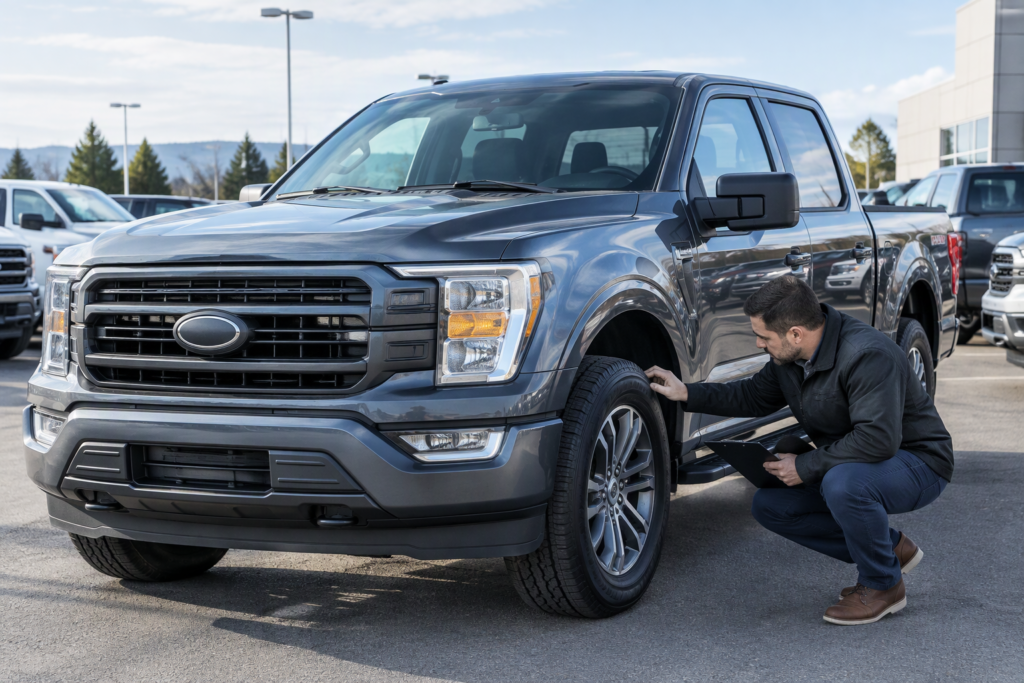
The Ford F-150 model years to avoid are 2004–2008, 2010, and 2017–2020 with the 10-speed automatic transmission. While a well-maintained F-150 can easily clear 200,000 to 250,000 miles, specific model years suffer from catastrophic 5.4L Triton cam phaser failures, breaking two-piece spark plugs, and slipping 10R80 10-speed transmissions that can cost $4,000 or more to rebuild.
If you want maximum truck reliability without buying someone else’s mechanical headache, target the 2015–2017 models with the 6-speed automatic or the 2023–2025 models. Below is the complete year-by-year breakdown of which F-150 engines and transmissions hold up, and what to check before signing paperwork.
Ford F-150 Reliability at a Glance (2004–2026)
| Model Years | Generation | Top Known Problems | Estimated Repair Cost | Buyer Verdict |
|---|---|---|---|---|
| 2004–2008 | 11th Gen | 5.4L 3-Valve Triton cam phasers, timing-chain guides, snapping spark plugs, rusted fuel-tank straps | $2,200–$4,500 | Avoid |
| 2009–2010 | 12th Gen | Carryover 5.4L Triton issues and fuel-pump fuse problems | $1,500–$3,500 | Avoid 2010, caution 2009 |
| 2011–2014 | 12th Gen | Early 3.5L EcoBoost timing-chain stretch and lead-frame downshift recall | $1,200–$3,000 | Good, 5.0L V8 best |
| 2015–2017 | 13th Gen | Door-latch recall and first-year 10-speed on some 2017 EcoBoost models | $500–$1,800 | Best value |
| 2018–2020 | 13th Gen | 10R80 CDF-drum failure, harsh shifting and 5.0L oil consumption | $2,500–$5,500 | Avoid or inspect closely |
| 2021–2022 | 14th Gen | Early 10R80 CDF-drum bushing issues and electrical recalls | $1,500–$5,000 | Inspect build date |
| 2023–2025 | 14th Gen | Minor infotainment and software updates | $400–$900 | Best modern buy |
The Worst Ford F-150 Model Years to Avoid
1. 2004–2008 Ford F-150: The 5.4L 3-Valve Triton Trap
Ask an independent Ford mechanic which truck generation keeps repair bays busy, and the 2004–2008 F-150 with the 5.4-liter 3-valve Triton V8 is a common answer.
- Symptoms: A diesel-like ticking noise at warm idle caused by failing variable cam phasers and worn timing-chain tensioners, plus two-piece spark plugs that can snap inside the cylinder head during tune-ups.
- Cost: Replacing the timing chains, guides, oil pump and cam phasers can run $2,500 to $4,200. Trucks with the simpler 4.6L 2-valve V8 are safer budget work-truck candidates.
2. 2010 Ford F-150: Last Year of Old Engines and First-Year Bugs
The 2010 F-150 sits in an awkward transition year before Ford introduced the modern Coyote 5.0L V8 and EcoBoost lineup.
- Symptoms: The problematic 5.4L 3-valve V8, electronic glitches, power-steering rack failures and fuel-pump relay burnout that can leave the truck cranking without starting.
- Cost: Fuse relocation kits are relatively inexpensive, but engine and steering-rack repairs can run $1,800 to $3,800.
3. 2017–2020 Ford F-150: 10R80 Transmission and V8 Oil Consumption
Ford debuted the 10R80 10-speed automatic on the 2017 3.5L EcoBoost and expanded it across most of the lineup in 2018. Early versions can suffer from a CDF clutch-drum problem that leaks hydraulic pressure.
- Symptoms: Clunky or delayed engagement into Drive or Reverse, harsh bangs between 3rd and 5th gear, gear hunting and, on many 2018–2020 5.0L engines, excessive oil consumption.
- Cost: Software updates may not resolve a slipped CDF-drum bushing. Rebuilding or replacing a 10R80 out of warranty can cost $4,200 to $5,800.
Found a Used F-150? Don’t Overpay for a Hidden Transmission Problem.
Dealers price trucks with early 10-speed complaints much like updated models. Enter the listing price and mileage into BiddingForAutos Deal Check to verify fair market value and spot red flags before you negotiate.
Which F-150 Engine Should You Buy?
Choosing the right Ford F-150 comes down to the engine and transmission pairing, not just the model year.
- 2.7L EcoBoost V6: Target 2015–2017 with the 6-speed or 2023 and newer with the updated 10-speed. Its compacted-graphite-iron block makes it a durable choice for daily driving and moderate towing.
- 5.0L Coyote V8: The 2015–2017 combination with the 6R80 6-speed is a sweet spot for buyers who want V8 power and simpler maintenance.
- 3.5L EcoBoost V6: Strong for towing, but inspect 2017–2020 trucks carefully for cold-start cam-phaser rattle and 10-speed shift quality.
The Best Ford F-150 Model Years to Buy Used
Best Overall Value: 2015–2017 Ford F-150
Ford switched to an aluminum-alloy body in 2015, and pairing it with the 5.0L V8 or 2.7L EcoBoost and proven 6-speed automatic gives buyers a durable, rust-resistant truck without the early 10-speed risks.
Best Modern Used Truck: 2023–2025 Ford F-150
Ford revised the 10R80 CDF-drum design for trucks built after August 16, 2022. The 2023 and newer models also offer updated infotainment and modern driver-assistance features.
4-Step Checklist Before Buying Any Used F-150
- Test-drive the transmission cold: Drive from a cold start and watch for harsh shifts between 1st, 3rd and 5th gear, plus delays when shifting from Park to Reverse.
- Listen on cold start for cam-phaser rattle: A metallic rattle lasting several seconds can signal worn cam phasers.
- Pull the history report and check recalls: Review fleet or auction history, structural damage and open recalls. See our guide on How to Read a Used Car History Report. If you are cross-shopping reliable crossovers, also see Toyota RAV4 Years to Avoid.
- Verify fair market value: Truck pricing varies widely by cab size, bed length, 4WD and axle ratio.
Ready to Negotiate on a Used Ford F-150?
Before you step into the finance office, check the real market math. Get an instant Free Deal Score or unlock a Full Deal Check Report with fair-market target pricing, dealer-fee alerts and a custom negotiation script.