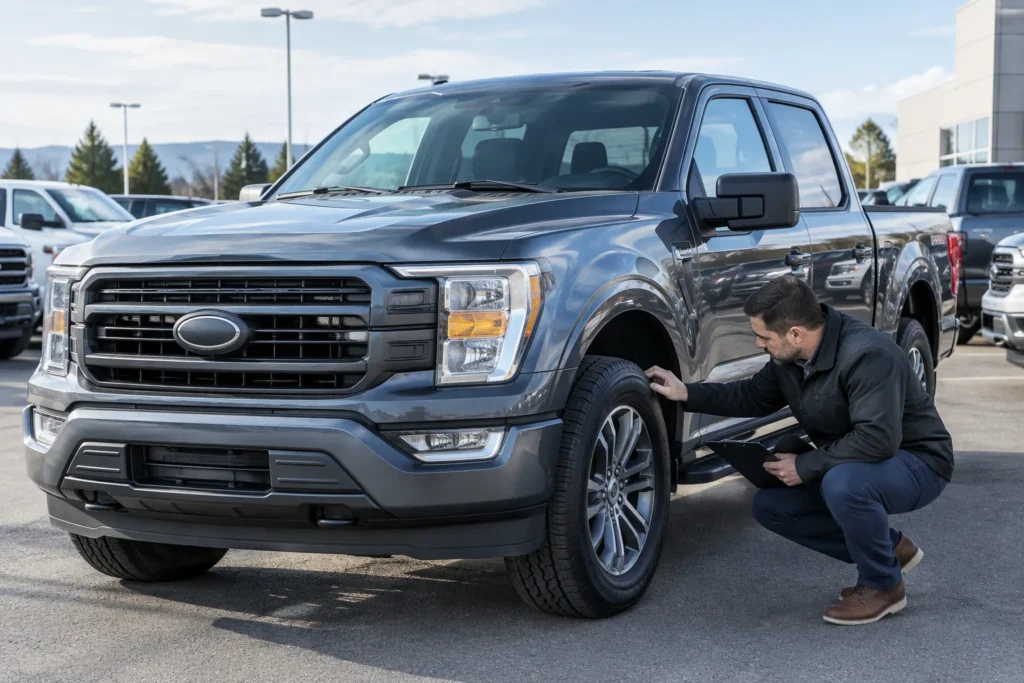
The Chevrolet Silverado 1500 years that deserve the most caution are 2007–2009, 2014–2015, and 2016–2018 trucks equipped with the 5.3-liter EcoTec3 V8 and 8-speed automatic transmission. The biggest risks are Active Fuel Management (AFM) lifter failures, excessive oil consumption, and 8-speed torque-converter shudder. Better used choices are generally well-documented 2010–2013 trucks with the 5.3-liter V8, carefully inspected 2019–2021 models, and newer trucks with complete service records. Engine, transmission, drivetrain, and maintenance history matter more than the model year alone.
Quick Answer: Which Silverado 1500 Years Should You Avoid?
Silverado years to approach cautiously
- 2007–2009: Watch for AFM lifter problems, oil consumption, valvetrain noise, and rust or electrical issues.
- 2014–2015: Early EcoTec3 V8 trucks can develop AFM-related misfires, collapsed lifters, ticking noises, and oil-consumption problems.
- 2016–2018: The 8-speed automatic can develop torque-converter clutch shudder, harsh shifting, or delayed engagement. Some V8 engines may also develop AFM lifter and oil-consumption issues.
- 2019–2021: Not automatic avoid years, but early trucks should be checked for transmission calibration issues, lifter concerns, electrical problems, and incomplete recall work.
Silverado years that are often better used choices
- 2010–2013: A well-maintained 5.3-liter V8 with the 6-speed automatic can be a strong value.
- 2019–2021: Buy selectively with a complete history and clean transmission test drive.
- 2022 and newer: Updated technology and powertrains, but still require VIN-specific recall and service checks.
There is no completely problem-free Silverado generation. A neglected “good” year can be a worse purchase than a well-maintained “bad” year with documented repairs.
Silverado 1500 Reliability at a Glance
| Model years | Main concerns | Buying outlook |
|---|---|---|
| 1999–2006 | Rust, age-related wear, intake-gasket issues, transmission and suspension wear | Buy conditionally |
| 2007–2009 | AFM lifters, oil consumption, valvetrain noise, electrical and rust issues | Approach cautiously |
| 2010–2013 | Rust, AFM-related concerns, suspension wear, age-related repairs | Often good value |
| 2014–2015 | AFM lifter failure, misfires, oil consumption, early drivetrain issues | Inspect carefully |
| 2016–2018 | Torque-converter shudder, harsh shifting, AFM lifter concerns | Avoid problem examples |
| 2019–2021 | Early-generation software, transmission, electrical, and lifter concerns | Buy selectively |
| 2022 and newer | Technology complexity, recalls, expensive repairs | Best modern choice with records |
The Biggest Silverado Engine Problem: AFM Lifter Failure
What is Active Fuel Management?
Active Fuel Management allows the V8 engine to deactivate selected cylinders during light-load driving. The system uses special lifters and oil-control components to switch between full V8 operation and reduced-cylinder operation. When an AFM lifter collapses, sticks, or fails to maintain movement, the engine may develop a misfire, ticking noise, low compression, or a check-engine light.
Common symptoms of a collapsed AFM lifter
- Persistent ticking from the top of the engine
- Check-engine or misfire codes
- Rough idle or reduced power
- Low compression or an intermittent dead cylinder
- Excessive oil consumption
- Evidence of camshaft, pushrod, rocker, or valvetrain repairs
A short startup tick does not automatically prove lifter failure. Exhaust leaks, injectors, accessories, and normal cold-start behavior can also create noise. Persistent ticking combined with a misfire, poor running, low compression, or valvetrain wear is the serious warning sign.
What AFM lifter repairs can involve
- Replacing one or more lifters
- Replacing the lifter oil manifold
- Replacing a damaged camshaft
- Replacing related pushrods or rocker components
- Repairing oil-pressure or oil-control problems
- Applying engine-control software updates where applicable
Do not accept “it only needs a tune-up” when a truck has a persistent misfire or valvetrain tick. A proper diagnosis should include scan-tool data and compression or leak-down testing where appropriate.
Silverado 1500 8-Speed Transmission Shudder
Which Silverado trucks are associated with the 8-speed issue?
The 8-speed automatic was used in selected Silverado 1500 configurations during the mid-to-late 2010s. The exact transmission depends on the engine, trim, drivetrain, and production configuration. GM service information describes shake or shudder during steady-speed or light-throttle acceleration on certain 8-speed applications and identifies torque-converter clutch shudder as a possible cause. See the applicable GM 8-speed shudder bulletin and verify the transmission by VIN or RPO code.
What transmission shudder feels like
- Vibration that feels like driving over rumble strips
- Shudder during light acceleration
- Slip or flare between gears
- Harsh engagement into Drive or Reverse
- Gear hunting on a mild grade
- Delayed acceleration after pressing the throttle
- Repeated fluid exchanges or software updates in the service history
Does a fluid exchange fix the problem?
Sometimes a properly performed fluid exchange and updated calibration may improve torque-converter clutch shudder. It is not proof that the transmission is permanently repaired. Ask for the repair order, service mileage, fluid specification, software-update details, and whether the torque converter was replaced. Test the truck after it reaches normal operating temperature.
Year-by-Year Silverado 1500 Breakdown
1999–2006 Silverado 1500
These trucks are old enough that condition matters more than reputation. Inspect the frame, suspension, brake and fuel lines, rocker panels, cab corners, steering, transmission, four-wheel drive, differential, cooling system, and evidence of heavy towing.
2007–2009 Silverado 1500
These trucks deserve extra caution, particularly with the 5.3-liter V8 and AFM-equipped configurations. Look for lifter or valvetrain failure, oil consumption, ticking, misfire codes, timing-chain wear, rust, electrical problems, and worn suspension components. A truck with low oil, blue smoke, persistent misfires, or repeated engine repairs should be treated as a project.
2010–2013 Silverado 1500
Later GMT900 trucks can be attractive because they combine familiar V8 powertrains with a traditional 6-speed automatic. Inspect AFM operation, oil consumption, transmission shifts, rust underneath the cab and bed, fuel and brake lines, transfer-case operation, front-end wear, differential leaks, and previous fleet use.
2014–2015 Silverado 1500
The 2014 redesign introduced the EcoTec3 engine family. Inspect cold-start noise, misfire history, scan-tool data, compression balance, oil level and condition, engine-repair records, transmission shift quality, and four-wheel-drive engagement. GM service information identifies AFM-related misfire and lifter concerns on specific applications, so check the exact VIN and engine.
2016–2018 Silverado 1500
This range deserves the most attention from buyers concerned about 8-speed shudder. Verify the transmission type, test-drive it fully warmed up, review transmission service records, ask whether the torque converter was replaced, scan for stored or pending codes, and have a technician inspect the engine for lifter or camshaft problems. Do not reject every truck automatically, but do reject unexplained shudder or harsh engagement.
2019–2021 Silverado 1500
The T1XX generation added updated engines, transmissions, electronics, and interiors. Inspect transmission calibration and shift quality, engine oil consumption, cylinder-deactivation operation, infotainment, cameras, trailer-brake controls, four-wheel drive, tailgate functions, water leaks, recalls, and service campaigns.
2022 and newer Silverado 1500
Newer trucks offer modern safety systems and updated powertrains, but more electronics and higher repair costs. Confirm recalls, build date, engine and transmission codes, software updates, warranty transferability, and operation of every camera, driver-assistance, trailer, and four-wheel-drive feature.
How to Inspect a Used Silverado Before Buying
1. Start with the VIN and vehicle history
- Confirm the exact engine, transmission, drivetrain, cab, and bed configuration.
- Check open recalls, accident history, flood or salvage branding, odometer records, fleet use, and auction transfers.
- Use the NHTSA recall lookup with the VIN rather than relying only on a model-year search.
2. Inspect the engine cold
Ask the seller not to warm up the truck before arrival. Listen for a persistent tick, metallic rattle, extended cranking, rough idle, misfire, smoke, or abnormal accessory noise. Scan the truck before and after the test drive because stored codes may remain when the warning light is off.
3. Check the oil level and condition
Low oil can indicate neglected maintenance, consumption, an active leak, or an attempt to hide a noise. Look for sludge, fuel dilution, metal particles, or oil dramatically below the safe range. Fresh oil is not proof that the engine is healthy.
4. Test the transmission when hot
- Drive through stop-and-go traffic, light and moderate acceleration, highway cruising, and uphill conditions.
- Test Reverse and Drive engagement.
- Watch for shudder, vibration, harsh shifts, delayed engagement, gear flare, hunting, and low-speed clunks.
5. Inspect the frame and underbody
Pay special attention to frame rails, crossmembers, suspension mounts, brake lines, fuel lines, transfer-case areas, differential housings, exhaust components, bed supports, and tow-hitch structure. Deep scaling, perforation, cracked mounts, or repaired structural damage can make the truck unsafe or uneconomical.
6. Check four-wheel drive and towing equipment
- Engage four-wheel drive according to the owner’s manual.
- Listen for grinding or popping and check the transfer case for leaks.
- Inspect the hitch, wiring, trailer-brake controller, transmission cooler, and lines.
- Look for evidence of excessive towing.
7. Get an independent pre-purchase inspection
- Engine scan and compression or leak-down testing when indicated
- AFM lifter and camshaft evaluation if symptoms exist
- Transmission-fluid and shift-quality assessment
- Frame, rust, suspension, steering, brake, and tire inspection
- Four-wheel-drive and leak inspection
- Recall and service-history review
Silverado Engine and Transmission Combinations to Favor
- A well-maintained 2010–2013 Silverado with the 5.3-liter V8 and 6-speed automatic
- A 2015–2016 truck with complete service records and no AFM symptoms
- A later truck with documented transmission service and clean scan data
- A newer Silverado with transferable powertrain or extended warranty coverage
More Worst Cars Buyer Guides
- Ford F-150 Years to Avoid: Which Engines & Transmissions Last 200,000 Miles
- Toyota RAV4 Years to Avoid (And the Best Model Years to Buy Used)
- Honda CR-V Years to Avoid: What to Check Before Buying
- 9 Worst 3-Row SUVs to Avoid in 2026
- 10 Used Cars to Avoid in 2026
Final Buying Advice
The worst Silverado 1500 years are not simply the oldest or newest trucks. The greater risk comes from a combination of AFM-equipped V8 engines, poorly documented maintenance, early-production drivetrain issues, and 8-speed trucks that have not been properly diagnosed.
- Confirm the exact engine and transmission.
- Run the VIN for recalls and history.
- Inspect the engine cold.
- Listen for AFM-related ticking.
- Scan for misfire and transmission codes.
- Test the 8-speed when fully warmed up.
- Check for torque-converter shudder.
- Inspect the frame and underbody.
- Verify four-wheel-drive operation.
- Obtain an independent inspection.
- Compare the full price with likely repair risk.
A clean 2010–2013 Silverado can be a smart budget truck, while a carefully inspected 2019-or-newer Silverado can offer better modern features. No Silverado should be purchased on model year alone. The right truck is the one with the right powertrain, complete records, clean diagnostics, and no unexplained engine or transmission symptoms.